






What's Happening?
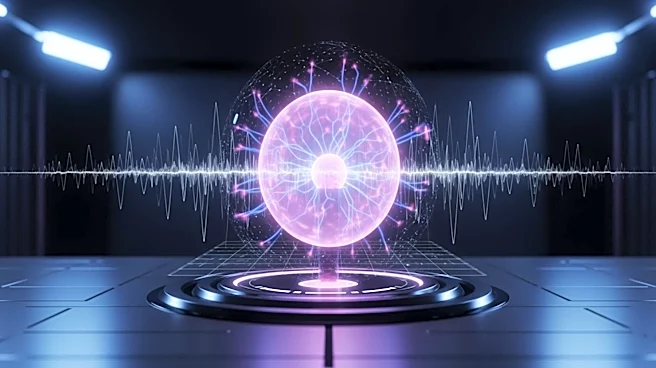
Researchers are making significant strides in nuclear fusion modeling, aiming to replicate the energy-producing reactions of the sun on Earth. This effort is part of a broader initiative to develop a virtually limitless source of clean energy. The challenge
lies in simulating the extreme conditions required for fusion, such as high temperatures and pressures, which are difficult to achieve and sustain on Earth. Scientists are using sophisticated computational models to troubleshoot and design fusion reactors, focusing on materials and control strategies that can withstand the intense conditions. The development of reduced models allows for faster computations, enabling real-time prediction and control of fusion processes.
Why It's Important?
Nuclear fusion holds the promise of providing a sustainable and clean energy source, which is crucial for addressing global energy demands and reducing reliance on fossil fuels. The advancements in modeling and simulation are essential for overcoming the technical challenges associated with fusion energy. By improving the efficiency and accuracy of these models, researchers can accelerate the development of practical fusion reactors. This progress could have significant implications for energy policy, economic growth, and environmental sustainability, as fusion energy could potentially transform the global energy landscape.
What's Next?
The continued development of computational models and simulation techniques will be critical for advancing nuclear fusion research. As these models become more refined, they will provide valuable insights into the design and operation of fusion reactors. Collaboration between scientists, engineers, and policymakers will be essential to translate these advancements into practical energy solutions. The success of these efforts could lead to the construction of pilot fusion reactors and eventually commercial fusion power plants, marking a significant milestone in the quest for clean energy.