






What's Happening?
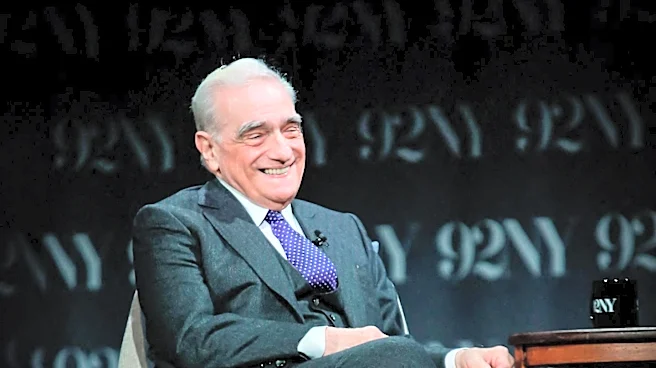
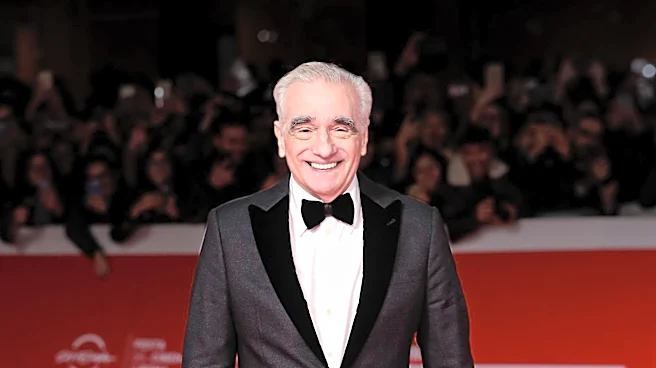
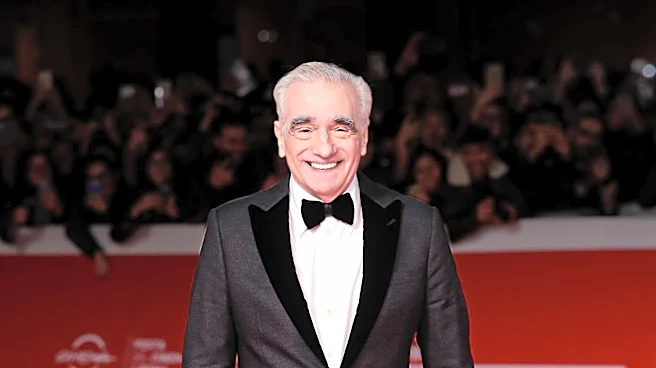
Renowned director Martin Scorsese recently disclosed that a planned Cleopatra film, set to star Angelina Jolie, was canceled due to a geopolitical conflict involving North Korean leader Kim Jong-un. Scorsese, who was slated to direct the project with
a script by Eric Roth, explained that the film's demise was a direct consequence of the 2014 cyberattack on Sony Pictures. This attack, attributed to North Korea's reaction to the Seth Rogen and James Franco comedy 'The Interview,' created significant turmoil within the studio. The controversy surrounding 'The Interview,' which depicted an assassination plot against Kim Jong-un, led to widespread security concerns and the leak of numerous internal Sony emails. These events ultimately derailed several projects, including the Cleopatra epic, despite it being in advanced stages of development with Angelina Jolie attached to the lead role. Scorsese recounted the situation during an appearance with his daughter, Francesca, on the Tribeca Film Festival's YouTube channel series 'Crafty,' attributing the cancellation to Kim Jong-un's lack of humor regarding the satirical film.
Why It's Important?
This revelation highlights the far-reaching and unexpected impacts of international political tensions on the U.S. entertainment industry. The cancellation of a major Hollywood production like the Cleopatra film, with A-list talent attached, demonstrates how geopolitical events can disrupt creative endeavors and incur significant financial losses for studios. The incident underscores the vulnerability of major corporations to cyber warfare and the potential for foreign governments to influence cultural output through such means. For Hollywood, it serves as a stark reminder of the complex global landscape in which it operates, where artistic expression can inadvertently trigger international incidents with tangible consequences. The event also sheds light on the internal dynamics of film production, as the Sony hack also exposed internal criticisms and pressures within the Cleopatra project team, further complicating its viability.
What's Next?
While the specific Cleopatra project discussed by Scorsese is unlikely to be revived in its original form, the broader implications for Hollywood's approach to sensitive geopolitical themes remain relevant. Studios may continue to exercise increased caution when developing projects that could be perceived as provocative by foreign governments, particularly those with a history of retaliatory actions. The incident could also reinforce the industry's focus on cybersecurity measures to protect intellectual property and internal communications from future attacks. Future productions dealing with international political figures or events might undergo more rigorous risk assessments. The ongoing evolution of cyber threats means that studios and other media companies will likely continue to invest in robust security protocols to safeguard their operations and creative pipelines from external interference.
Beyond the Headlines
The cancellation of the Cleopatra film due to geopolitical fallout raises deeper questions about artistic freedom versus international diplomacy and corporate responsibility. It illustrates a scenario where creative expression, even in a satirical context, can inadvertently become a matter of national security and international relations. This incident could contribute to a chilling effect, where filmmakers might self-censor to avoid potential political repercussions or cyberattacks, thereby limiting the scope of storytelling. Furthermore, it highlights the interconnectedness of global events, demonstrating how a comedy film could indirectly impact a historical epic. The episode also serves as a case study in the evolving nature of threats faced by multinational corporations, extending beyond traditional market competition to include state-sponsored cyber warfare and its ripple effects across various industries.