





What's Happening?
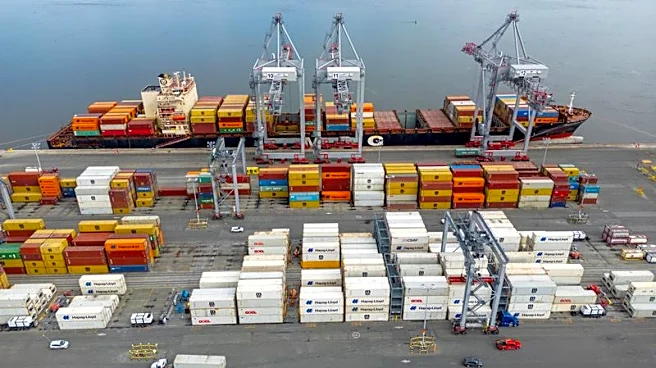
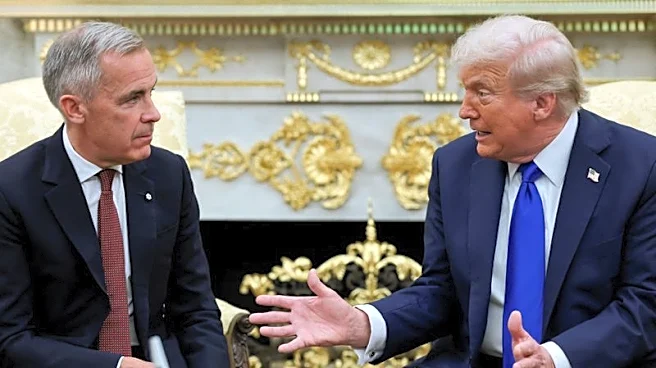
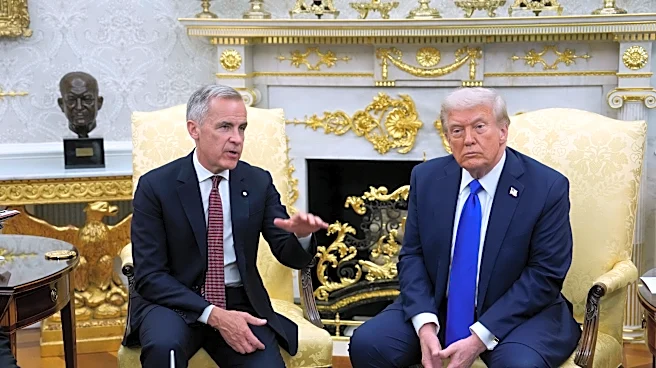
President Trump has temporarily halted new tariffs against Canada, which were set to impact approximately $20 billion worth of Canadian imports. The 50% tariffs were scheduled to take effect at midnight but were paused following what President Trump described
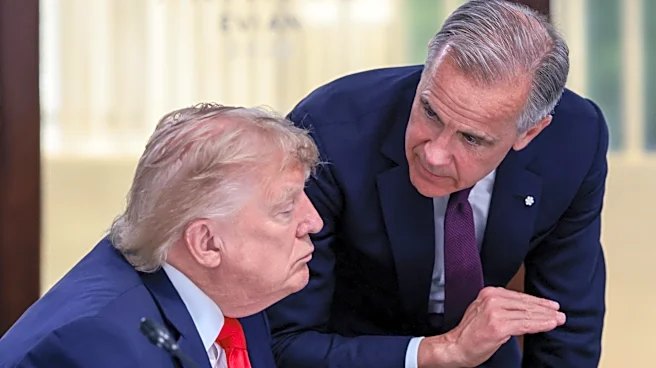
as a "last-minute deal." The pause is slated to remain in effect through August 21 as negotiators work towards a final agreement. President Trump indicated that the agreement is subject to final documentation and suggested the unfinished Keystone XL pipeline expansion could be revived. Canadian Prime Minister Mark Carney acknowledged substantial progress but noted that important work remains. This development follows months of trade disputes, with the administration now invoking the Tariff Act of 1930 after a previous legal authority for tariffs was struck down by the Supreme Court. Democratic officials, including Kentucky Democratic Gov. Andy Beshear and Rep. Brad Schneider (D-Ill.), have criticized the economic impact of these tariffs, citing increased costs for families and damage to state economies.
Why It's Important?
The temporary pause in tariffs on Canadian imports carries significant implications for the U.S. economy and trade relations. Canada is a major trading partner for several U.S. states, and ongoing tariff disputes have already led to economic consequences. For instance, Kentucky Democratic Gov. Andy Beshear highlighted that Canada is Kentucky's number one trading partner, and the trade dispute has led to Canadian actions, such as removing Kentucky bourbon from shelves, which negatively impacts the state's economy. Rep. Brad Schneider (D-Ill.) stated that tariffs have cost the average Illinois family over $2,200 since President Trump's election and have resulted in over $5 million in GDP loss for the Illinois economy. The invocation of the Tariff Act of 1930 signifies a shift in the administration's trade strategy, potentially setting a precedent for future trade disputes. A final agreement could stabilize trade relations and alleviate economic pressures on U.S. industries and consumers, while a failure to reach one could exacerbate existing economic challenges and further strain international partnerships.
What's Next?
The immediate next step involves ongoing negotiations between the U.S. and Canada, with the tariff pause set to expire at the end of August 21. The outcome of these negotiations will determine whether the tariffs are permanently averted or reinstated. If a final agreement is reached, it could lead to a stabilization of trade relations and potentially the revival of projects like the Keystone XL pipeline expansion, as suggested by President Trump. Conversely, if negotiations fail, the tariffs could be imposed, leading to further economic repercussions for U.S. states heavily reliant on Canadian trade and potentially escalating the trade dispute. Stakeholders, including U.S. farmers, manufacturers, and consumers, will be closely watching the developments, as the resolution will directly impact their costs and market access. The use of the Tariff Act of 1930 also suggests that the administration may continue to explore alternative legal avenues for imposing trade measures in the future.
Beyond the Headlines
Beyond the immediate economic impact, the ongoing trade dispute and the administration's approach to tariffs raise broader questions about the future of U.S. trade policy and international relations. The criticism from Democratic officials underscores a partisan divide on trade strategies, with concerns about the long-term effects on U.S. competitiveness and consumer prices. The reliance on the Tariff Act of 1930, a law from the Great Depression era, highlights a potential shift towards more protectionist trade measures, which could have far-reaching implications for global trade norms and agreements. Furthermore, the suggestion of reviving the Keystone XL pipeline expansion links trade policy with energy infrastructure, indicating a multifaceted approach to economic and strategic objectives. The dispute also reflects the complexities of maintaining strong alliances while pursuing national economic interests, as evidenced by the concerns raised by states like Kentucky regarding the impact on their key trading partners.