




What's Happening?
The global smart agriculture farming market is experiencing significant growth, with projections indicating it will reach USD 58.59 billion by 2035, expanding at a Compound Annual Growth Rate (CAGR) of 9.90% between 2026 and 2035. This growth is fueled
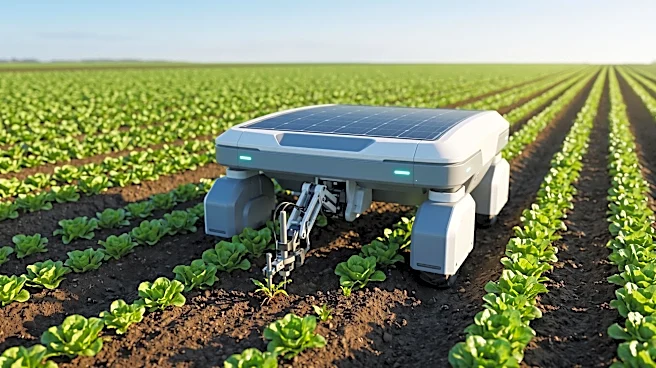
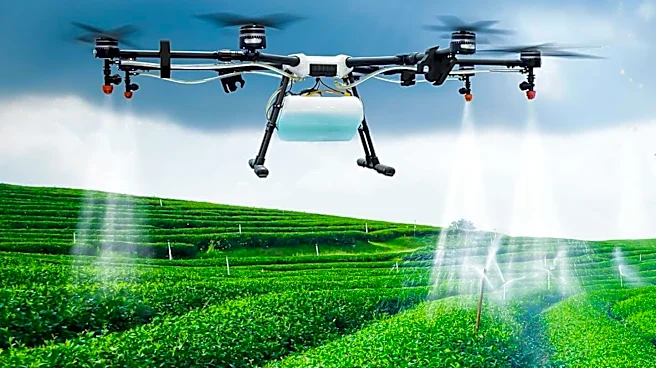
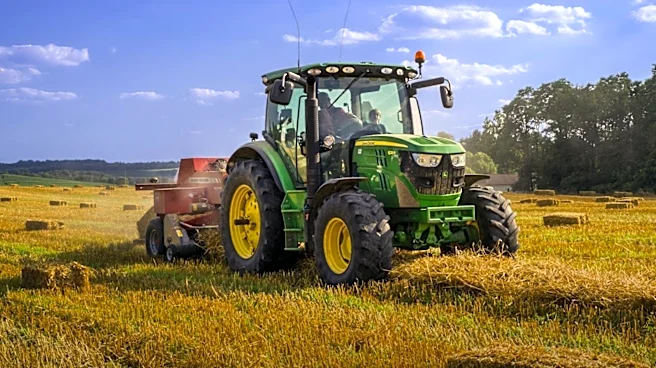
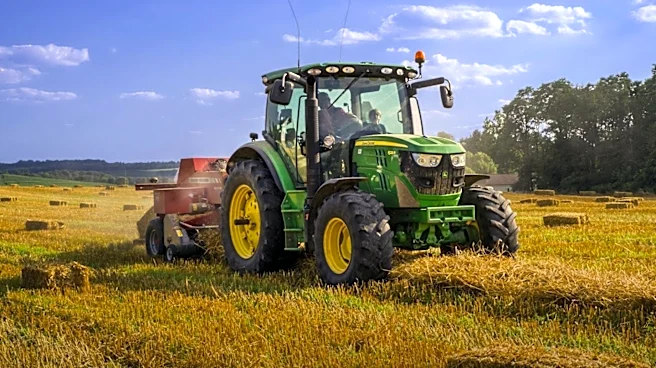
by the increasing adoption of digital technologies, connected equipment, and intelligent systems designed to enhance crop and livestock production. Key drivers include the rising demand for higher farm productivity, efficient resource utilization, reliable field information, and optimized labor use. Technologies such as AI, IoT sensors, drones, smart irrigation systems, and autonomous machinery are becoming integral to modern agricultural operations. North America currently dominates this market, holding approximately 41.2% of the share in 2025, while the Asia Pacific region is anticipated to exhibit the fastest growth during the forecast period due to increasing farm mechanization and government-led digital agriculture programs. Leading companies like John Deere, Trimble Inc., and AGCO Corporation are at the forefront, contributing through connected machinery, precision guidance, and integrated farm management solutions.
Why It's Important?
The expansion of the smart agriculture market is crucial for the U.S. agricultural sector, which is largely defined by family-owned operations. While small family farms are the most common, large-scale family farms, though fewer in number, contribute significantly to the nation's total agricultural production value. The integration of smart farming technologies offers these farms, regardless of size, the opportunity to enhance efficiency, reduce costs, and improve yields in the face of tightening margins and volatile commodity prices. For instance, precision farming technologies like variable-rate application and AI-based crop monitoring enable farmers to optimize input use, such as water, seeds, and chemicals, thereby reducing waste and lowering operational expenses. This technological shift supports the long-term success of rural America by fostering more resilient and profitable farming enterprises. The U.S. leadership in this market also positions American agri-tech companies to influence global farming practices and supply-chain efficiency, further solidifying the nation's role in agricultural innovation.
What's Next?
The smart agriculture market is expected to continue its rapid evolution, with ongoing advancements in AI, IoT, and automation. Future developments will likely focus on creating more interoperable platforms and scalable solutions that can be adopted by a wider range of farms, including smaller operations. The increasing demand for food due to population growth will further pressure farmers to produce more efficiently, driving continued investment in these technologies. Companies will likely emphasize solutions that offer clear returns on investment and ease of use to overcome adoption barriers such as high upfront costs and data privacy concerns. Government policies and subsidies will also play a critical role in accelerating adoption, particularly those supporting conservation practices and digital agriculture infrastructure. The market will also see a push towards more affordable sensors and AI-driven platforms to cater to smallholder farmers, potentially shifting global dynamics and increasing demand for low-cost, high-impact solutions.
Beyond the Headlines
Beyond the immediate economic benefits, the widespread adoption of smart agriculture technologies carries deeper implications for environmental sustainability and food security. Precision farming directly addresses environmental concerns by enabling site-specific management, which can significantly reduce the environmental footprint of agriculture, particularly concerning nitrogen runoff and greenhouse gas emissions. By optimizing resource use, these technologies contribute to more sustainable farming practices, aligning with global efforts to combat climate change. Furthermore, the data-driven nature of smart agriculture transforms farming into an information business, where accurate records and data analysis become as crucial as traditional farming skills. This shift necessitates a new skill set for farmers, emphasizing data literacy and technological proficiency. The ethical considerations surrounding data ownership, privacy, and the potential for technological disparities among farmers will also become increasingly prominent, requiring careful policy development and industry standards to ensure equitable access and benefits.