



What's Happening?
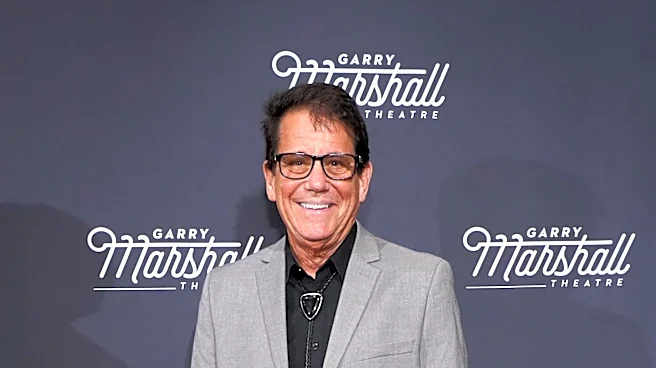
Anson Williams, known for his role as Potsie Weber on the hit show 'Happy Days,' disclosed that the salaries from the sitcom in the 1970s were insufficient for a lifetime of earnings, prompting him to pursue a music career. In an interview on the 'Still
Here Hollywood Podcast,' Williams stated that he earned between $900 and $1,200 per episode. Inspired by other actors who supplemented their income through music, he convinced 'Happy Days' creator Garry Marshall to incorporate a band into the show, which allowed him to perform and subsequently secure bookings at state fairs for a decade. This side career proved to be more financially beneficial and offered a different life experience.
Why It's Important?
This revelation highlights the significant disparity between actor salaries in past decades and current industry standards, particularly for popular television shows. It underscores the financial realities faced by many actors, even those on successful series, who often needed to diversify their income streams. For the entertainment industry, it sheds light on the evolution of compensation models and the increasing financial demands on performers. It also illustrates the entrepreneurial spirit required in the arts, where individuals often create their own opportunities to ensure financial stability beyond their primary roles. This historical context is crucial for understanding the economic landscape of television production and actor compensation.
What's Next?
While Williams's comments are retrospective, they contribute to ongoing discussions within the entertainment industry regarding fair compensation, residuals, and the long-term financial security of performers. These discussions often resurface during union negotiations and contract renewals. The insights from veteran actors like Williams can inform current and future generations of performers about the importance of financial planning and exploring multiple avenues for income. It may also encourage a re-evaluation of how historical contributions to popular culture are compensated over time, especially concerning syndication and streaming rights.
Beyond the Headlines
Williams's story extends beyond personal finance, touching on the creative and collaborative aspects of television production. His initiative to suggest a band for 'Happy Days' not only benefited him financially but also enriched the show's content, contributing to its eventual rise to the number one spot globally. This demonstrates how individual contributions can significantly impact a show's success and longevity. Furthermore, Williams's post-'Happy Days' career as a director, working on shows like 'Beverly Hills, 90210' and 'Lizzie McGuire,' exemplifies the career transitions common in Hollywood. His commitment to using his platform for social good, inspired by Garry Marshall, also highlights the broader ethical responsibilities many public figures embrace.