




What's Happening?
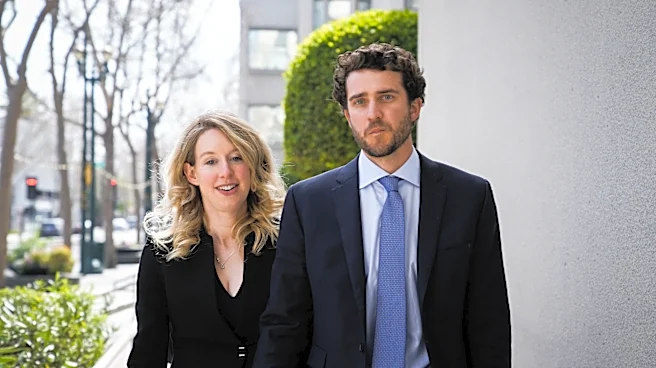
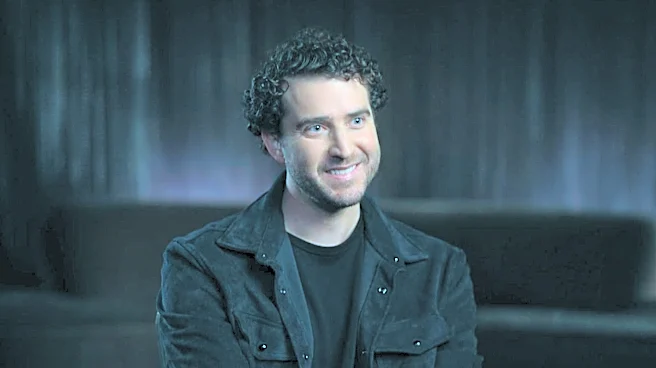
Billy Evans, husband of Theranos founder Elizabeth Holmes, has revealed he gave up a profit share worth tens of millions of dollars from the A24-produced documentary 'You Can See Everything.' The film, directed by Nathan Fielder and Lance Oppenheim, chronicles
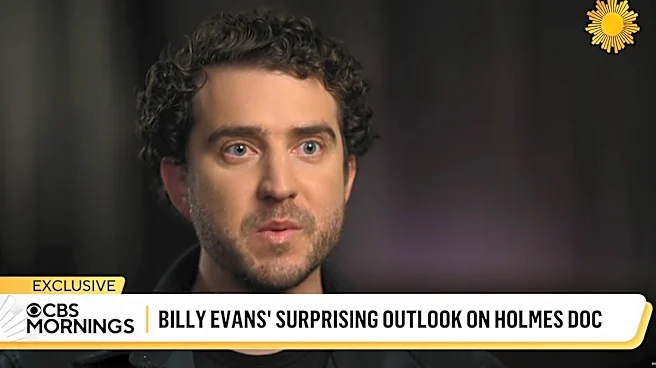
Evans' relationship with Holmes leading up to her prison sentence. 'You Can See Everything' has achieved significant box office success, grossing approximately $90 million globally against a $7 million budget, with a $15 million opening weekend in the U.S. and Canada, making it the highest-grossing documentary opening of the year. In an interview with CBS News' Matt Gutman, Evans confirmed the substantial value of the relinquished profits but declined to disclose where the money ultimately went, stating only that he was 'not unhappy about that decision' and that it was intended to demonstrate the film was 'not about the money.' Evans also mentioned his current financial strain from running his blood-testing startup, Haemanthus, and significant legal and childcare expenses.
Why It's Important?
Evans' decision to forgo a multi-million dollar profit share from a highly successful documentary raises questions about the motivations behind his involvement and the film's financial arrangements. This action could be interpreted in various ways: as a genuine attempt to distance himself from profiting off his wife's controversial story, or as a strategic move to shape public perception. For the documentary film industry, this situation highlights the complex ethical considerations surrounding subjects' participation and compensation, especially when dealing with high-profile, sensitive narratives. It also underscores the significant financial success that documentaries can achieve, attracting substantial investment and generating considerable revenue. The ambiguity surrounding the destination of the relinquished funds could spark further speculation and discussion about transparency in film production finances, particularly when subjects are involved in profit-sharing agreements. This event also brings renewed attention to the Theranos saga and Elizabeth Holmes's ongoing legal and personal narrative.
What's Next?
The documentary 'You Can See Everything' is expected to continue its successful run, potentially expanding its reach through streaming platforms and international distribution, further increasing its box office and critical impact. The lack of disclosure regarding the destination of Evans' relinquished profit share may lead to continued public and media speculation. A24 and the filmmakers, Nathan Fielder and Lance Oppenheim, have not yet commented on Evans' statements, and their silence may persist. Future interviews with Evans or the filmmakers could potentially shed more light on the financial arrangements or the motivations behind his decision. The film's success may also encourage more documentaries to explore complex personal stories surrounding public figures, potentially influencing how such subjects are engaged and compensated in future productions. The ongoing public interest in Elizabeth Holmes and the Theranos case will likely keep the film and its related narratives in the spotlight.
Beyond the Headlines
Evans' decision to give up a substantial profit share from 'You Can See Everything' delves into deeper ethical and moral considerations surrounding the commodification of personal narratives, especially those intertwined with public scandal and legal consequences. It raises questions about the true intent behind participating in such a film—whether it's for financial gain, narrative control, or a desire to influence public opinion. The act of publicly relinquishing wealth, while not disclosing its recipient, can be seen as a performative gesture that complicates the perception of altruism versus strategic image management. This scenario also highlights the power dynamics between documentary subjects and filmmakers, particularly when the subject is closely tied to a notorious public figure. It prompts a broader discussion about accountability, redemption, and the role of media in shaping public understanding of complex human stories, especially when financial incentives are involved. The narrative surrounding Evans' choice adds another layer to the already intricate Theranos saga, inviting audiences to consider the various motivations at play.