








What's Happening?
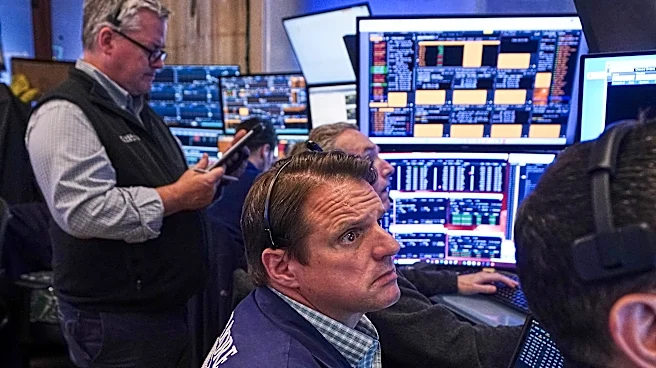
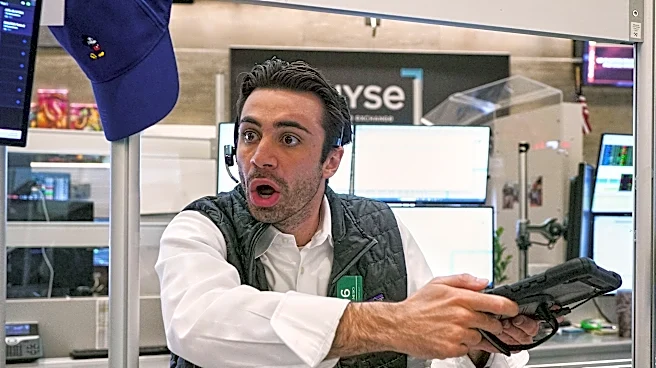
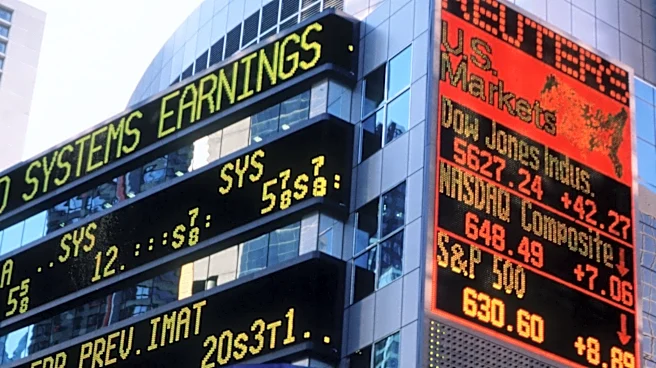
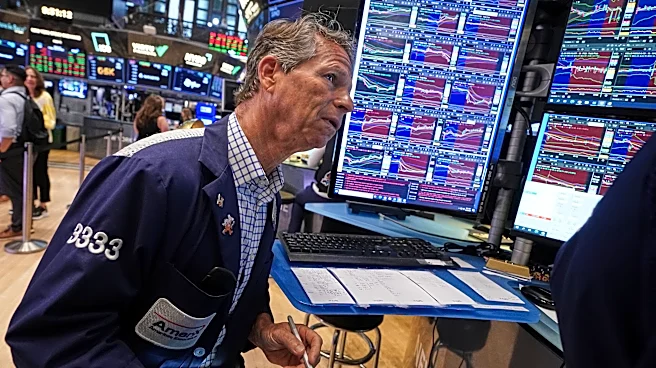
The U.S. stock market experienced a significant boost on Monday, driven by a rebound in artificial intelligence (AI) stocks. The Standard & Poor’s 500 index rose by 0.7%, nearing its all-time high, while the Nasdaq composite increased by 1.1%, and the Dow
Jones Industrial Average climbed by 155 points, or 0.3%. This surge was primarily fueled by the strength of companies in the AI technology sector. Notably, Broadcom played a crucial role in this uplift, with its shares rising 3.7% following the announcement of long-term agreements to supply silicon products to Apple. Despite recent volatility in AI stocks, concerns persist about whether the substantial investments in AI chips and data centers will yield sufficient productivity and profit gains.
Why It's Important?
The resurgence of AI stocks is significant as it highlights the ongoing investor interest and confidence in the potential of AI technology to drive future economic growth. This trend is crucial for the tech industry, which relies heavily on innovation and investment to maintain its competitive edge. The performance of AI stocks also impacts broader market indices, influencing investor sentiment and economic forecasts. However, the volatility and doubts surrounding the sustainability of AI investments underscore the need for cautious optimism. The market's response to AI developments can affect investment strategies, corporate valuations, and the allocation of resources within the tech sector.
What's Next?
The global appetite for AI investments will face further scrutiny as SK Hynix, a South Korean computer memory manufacturer, plans to raise $28 billion through a U.S. stock offering on Nasdaq. This move could test investor confidence in the AI sector's growth prospects. Additionally, the inclusion of SpaceX in the Nasdaq 100 index may prompt funds tracking the index to adjust their portfolios, potentially influencing market dynamics. As AI technology continues to evolve, stakeholders will closely monitor developments to assess the long-term viability and impact of AI investments on the broader economy.