



What's Happening?
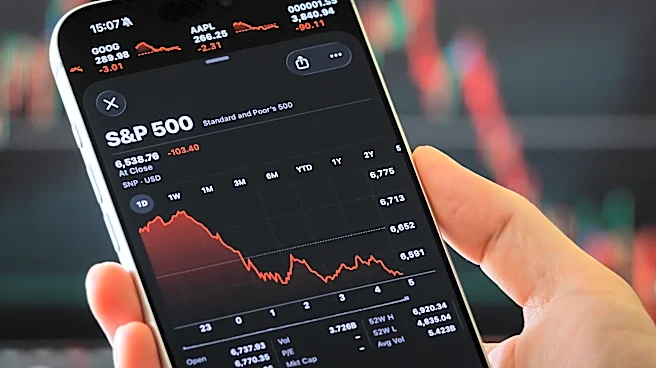
The S&P 500 has recently experienced notable volatility, with the index currently sitting approximately 10% below its all-time high. This follows a period where the index saw its worst week since April 2025, according to an analysis of S&P 500 daily closing
prices from 1970 to November 13, 2026. Such market swings, characterized by a weekly drop of at least 2.5% followed by a rebound of more than 2.5% while remaining near a record close, are unusual when the S&P 500 is close to its peak. Historically, there have been 19 such instances since 1970. While recent history since 2018 shows positive returns six months later in all six occurrences, with a median return exceeding 11%, prior periods presented mixed results, often including negative forward returns.
Why It's Important?
This increased volatility in the S&P 500 is significant for U.S. investors and the broader economy as it suggests that the underlying conditions that propelled stock prices to record levels may be shifting. The market's behavior near all-time highs is often a barometer of investor confidence and economic stability. The current swings indicate a period of uncertainty, potentially leading investors to re-evaluate their strategies. While some historical patterns suggest potential for future gains, the mixed results from earlier periods of similar volatility highlight the unpredictable nature of the market. This situation could impact retirement funds, investment portfolios, and overall economic sentiment, as market stability is often linked to consumer and business confidence.
What's Next?
Investors are currently grappling with concerns about the market's future direction. While a recent bounce might offer temporary relief, historical data suggests that such setups can lead to weaker forward-looking returns. The market's biggest moves, both upward and downward, tend to cluster, indicating that further volatility could be expected. This period of uncertainty may prompt a more cautious approach from investors and could influence corporate decision-making regarding investments and expansions. The performance of the S&P 500 in the coming months will be closely watched as a key indicator of economic health and investor sentiment, potentially shaping policy discussions and financial strategies.
Beyond the Headlines
The current market volatility extends beyond mere numerical fluctuations, reflecting deeper investor concerns about the sustainability of recent market gains and the broader economic outlook. The unusual nature of these swings near record highs suggests a potential shift in market dynamics, possibly influenced by factors such as inflation, interest rate expectations, or geopolitical events. This period could test the resilience of investment strategies that have thrived in a prolonged bull market. It also underscores the psychological aspect of investing, where investor sentiment and reactions to market movements can amplify trends, creating a self-fulfilling prophecy of either optimism or caution. Understanding these underlying currents is crucial for navigating the evolving financial landscape.