





What's Happening?
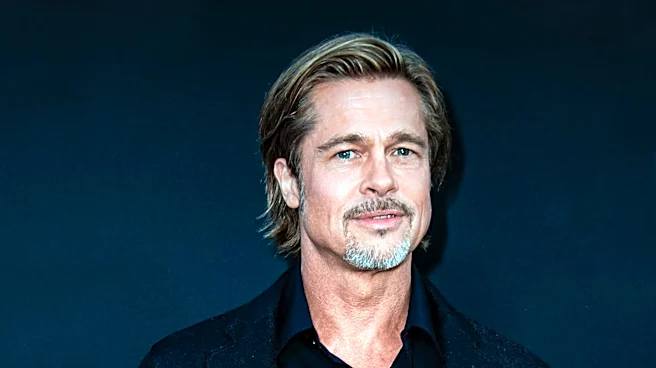
Actor Brad Pitt has openly discussed his previous marriages to Jennifer Aniston and Angelina Jolie, offering insights into his evolving perspectives on love and relationships. This comes as his romance with jewelry executive Ines de Ramon continues to develop.
Pitt and Aniston were married from 2000 to 2005, with Pitt initially denying the marriage was a failure despite their separation, emphasizing that he embraced 'the messiness of life' and that they remained loving until the end. However, in a 2011 interview, he made a controversial comment about 'pretending the marriage was something that it wasn't,' later clarifying that he meant he was becoming 'dull to myself' and not criticizing Aniston. His marriage to Angelina Jolie, from 2014 to 2016, which produced six children, ended in a lengthy divorce process that concluded in 2019. Pitt reflected on this period by stating he understood 'letting someone go if you love them,' acknowledging that 'there's no love without loss.' His current relationship with Ines de Ramon became public after their appearance at the British Grand Prix in 2024, with Pitt describing their connection as simply 'evolving' rather than a calculated public move.
Why It's Important?
Brad Pitt's public reflections on his past high-profile marriages offer a rare glimpse into the personal lives of major Hollywood figures, which often resonate with the public's own experiences with relationships and divorce. His candidness about the complexities of love, the challenges of maintaining a public persona, and the evolution of personal feelings can influence public discourse on celebrity relationships and the broader societal understanding of marriage and separation. For the entertainment industry, such personal narratives from A-list actors can generate significant media attention, impacting public perception of their brand and future projects. The ongoing interest in his personal life underscores the enduring fascination with celebrity culture and how it intertwines with universal themes of love, loss, and personal growth. His statements also highlight the pressure celebrities face to maintain a certain image while navigating deeply personal life events, often under intense scrutiny.
What's Next?
As Brad Pitt's relationship with Ines de Ramon continues to evolve, public and media attention will likely remain focused on their future. Speculation about marriage has already begun following recent comments, suggesting that any further developments in their relationship will be closely watched. Pitt's ongoing acting career and his role as a producer mean he will continue to be in the public eye, providing more opportunities for updates on his personal life. His past experiences with public scrutiny and the lessons learned from his previous marriages may influence how he chooses to navigate this new relationship, potentially leading to a more private approach or, conversely, more open discussions as he has done recently. The legal proceedings related to his divorce from Angelina Jolie, particularly regarding the sale of a winery and allegations of abuse, have reached a legal conclusion, but the emotional and familial impacts are ongoing, which may continue to shape his public narrative.
Beyond the Headlines
Beyond the immediate news of Brad Pitt's relationships, his reflections touch upon deeper societal and psychological themes. His initial denial of his marriage to Jennifer Aniston being a 'failure' despite its end, and his later admission of 'pretending' it was something it wasn't, highlight the internal struggles individuals face in maintaining public appearances versus personal truths. This duality is particularly pronounced for celebrities, whose lives are often idealized and scrutinized. His statement that 'love changes shape' and 'there's no love without loss' offers a philosophical perspective on relationships that resonates beyond the celebrity sphere, speaking to the universal human experience of evolving emotions and the acceptance of impermanence in personal connections. The ongoing public interest in his personal life also underscores the cultural phenomenon of parasocial relationships, where audiences feel a deep, one-sided connection to public figures, making their personal journeys feel personally relevant to many.