






What's Happening?
Jennifer Aniston's Bel Air home features an oversized kitchen island with an integrated dining area, signaling a growing trend towards informal dining and home entertaining. The design, explained by Stephen Shadley, emphasizes natural materials like wood,
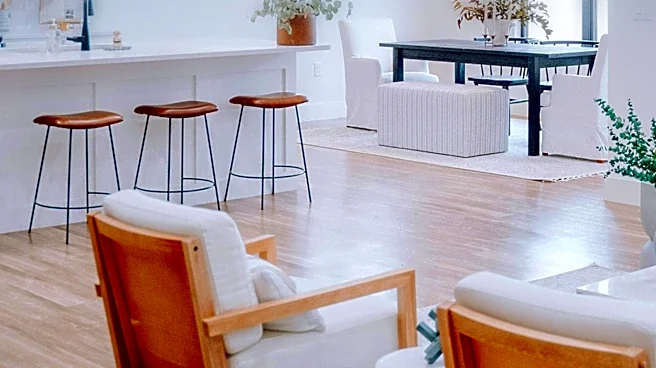
stone, and bronze to create a warm and inviting atmosphere. This kitchen island-cum-dining area is appointed with wooden bar stools, fostering a social hub where cooking, eating, and hosting merge seamlessly. Magdalena Gierasinska, a design expert at Barker and Stonehouse, notes that bar stools are set to define dining spaces, reflecting the rise of informal dining. This design choice maximizes the social potential of the kitchen, making it the heart of the home where family and friends can gather casually. The informal nature of this setup, in contrast to more industrial elements of the room, contributes to a welcoming environment.
Why It's Important?
This design trend, exemplified by Jennifer Aniston's home, reflects a significant shift in U.S. lifestyle and home design, moving away from formal dining rooms towards more integrated, casual living spaces. The oversized kitchen island as a central gathering point impacts social dynamics within households, encouraging more frequent and relaxed interactions among family members and guests. For the home furnishings and interior design industries, this trend drives demand for specific products like large kitchen islands, bar stools, and open-plan kitchen solutions. It also influences architectural design, favoring layouts that prioritize kitchen-centric living. Real estate markets may see increased value placed on homes with well-designed, spacious kitchen areas that facilitate this informal entertaining style. This shift also suggests a broader cultural preference for comfort and practicality in home environments, aligning with modern, busy lifestyles where multi-functional spaces are highly valued.
What's Next?
The trend of oversized kitchen islands and informal dining is expected to continue shaping home design and consumer preferences in the U.S. Interior designers and architects will likely incorporate these elements more frequently into new constructions and renovations. Manufacturers of kitchen cabinetry, countertops, and seating will adapt their product lines to meet the demand for larger, more versatile island designs and stylish bar stools. Retailers of home goods will also focus on accessories and decor that complement these open, social kitchen spaces. We may see further innovations in kitchen technology and appliances that enhance the functionality of these central hubs, such as integrated charging stations or smart appliance controls. This trend could also influence the hospitality sector, with restaurants and cafes adopting more casual, communal dining setups to mirror the comfort of home.
Beyond the Headlines
Beyond aesthetics and functionality, the rise of the oversized kitchen island for casual dining reflects deeper societal changes. It signifies a blurring of traditional boundaries between cooking, eating, and socializing, fostering a more communal and less formal approach to daily life. This design choice can enhance family bonding and facilitate spontaneous social interactions, potentially strengthening community ties within the home. Ethically, it promotes a more sustainable use of space by making one area multi-functional, potentially reducing the need for separate, underutilized rooms. Culturally, it aligns with a desire for authenticity and comfort, moving away from rigid social conventions in favor of relaxed, genuine connections. This shift could also impact mental well-being, as a warm, inviting home environment is often linked to reduced stress and increased happiness.