






What's Happening?
Saronic Technologies, an Austin, TX-based defense and space manufacturing company, has successfully closed a Series D funding round, raising $1.75 billion. This latest investment brings the company's total funding to $2.75 billion across six rounds since
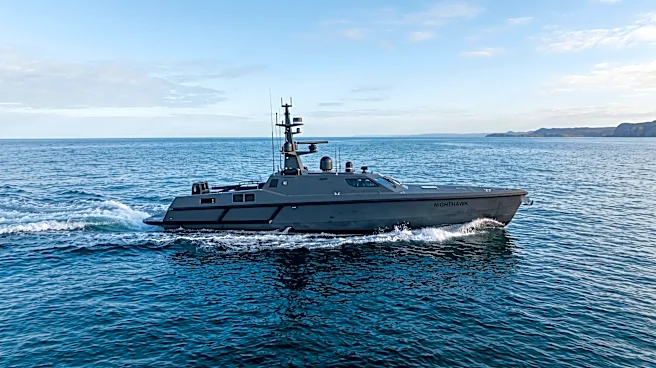
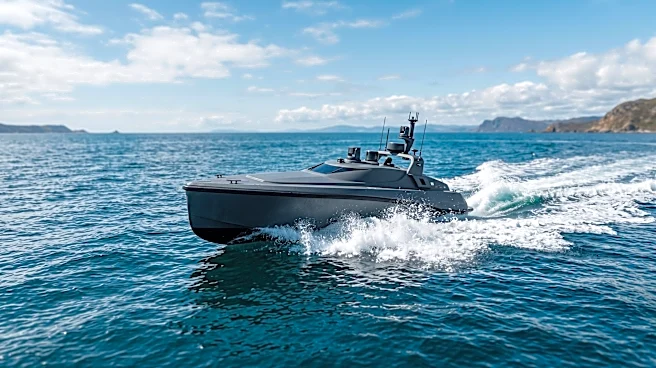
its founding in 2022. Saronic Technologies specializes in autonomous vessels and maritime security technology, including unmanned surface vehicles and maritime domain awareness platforms. The company currently employs 1,363 individuals, with a significant portion of its workforce located in North America. In addition to its funding success, Saronic Technologies is actively recruiting for a Technical Operator role, which will involve supporting mission operations for its autonomous platforms. The company's focus on advanced maritime technology positions it as a key player in the evolving defense and security landscape.
Why It's Important?
This substantial funding round for Saronic Technologies underscores the increasing strategic importance of autonomous maritime security in the U.S. defense sector. The development and deployment of unmanned surface vehicles and advanced maritime domain awareness platforms are critical for enhancing national security, protecting vital sea lanes, and projecting power in contested waters. For the U.S. defense industry, this investment signifies a continued shift towards innovative, technology-driven solutions, potentially leading to new contracts and partnerships for companies capable of integrating these advanced systems. Economically, the growth of companies like Saronic Technologies creates high-skill jobs in the technology and manufacturing sectors, particularly in regions like Austin, TX. Furthermore, the advancements in maritime security technology could offer a strategic advantage to the U.S. Navy and Coast Guard, improving their operational efficiency and reducing risks to personnel in dangerous environments. This trend also highlights a broader investment in dual-use technologies that can serve both military and commercial applications, potentially opening new markets for maritime surveillance and logistics.
What's Next?
Following this significant Series D funding, Saronic Technologies is expected to accelerate the development and deployment of its autonomous maritime platforms. The company's active recruitment for a Technical Operator role suggests an immediate focus on expanding its operational capabilities and supporting ongoing missions. This influx of capital will likely be directed towards research and development, scaling manufacturing processes, and potentially expanding its market reach within the defense and security sectors. We can anticipate increased testing and demonstrations of their unmanned surface vehicles and maritime domain awareness platforms, aiming to secure further contracts with government agencies. The company's growth may also lead to strategic partnerships with other defense contractors or technology firms to integrate their systems into broader defense architectures. The success of Saronic Technologies could also inspire further investment in the autonomous defense technology space, fostering a competitive environment for innovation.
Beyond the Headlines
The rise of companies like Saronic Technologies and their focus on autonomous maritime security raises profound questions about the future of naval warfare and international relations. The increasing reliance on unmanned systems could redefine military doctrines, potentially leading to a reduction in human casualties but also introducing new ethical dilemmas regarding autonomous decision-making in combat. Legally, the deployment of these advanced platforms will necessitate the development of new international laws and regulations governing their use, particularly concerning issues of accountability and the rules of engagement. Culturally, the shift towards autonomous defense systems could alter public perception of military operations, potentially leading to a more detached view of conflict. Long-term, the proliferation of such technology could trigger an arms race in autonomous systems, compelling nations to invest heavily in similar capabilities to maintain strategic parity. This technological evolution also has implications for cybersecurity, as autonomous platforms present new vectors for cyberattacks and electronic warfare, requiring robust defensive measures.