


What's Happening?
The New York Jets are currently navigating a critical juncture in their 2026 NFL season, holding a 2-6 record, which has sparked discussions about their quarterback situation. Veteran quarterback Geno Smith, 36, is in the final year of his contract and
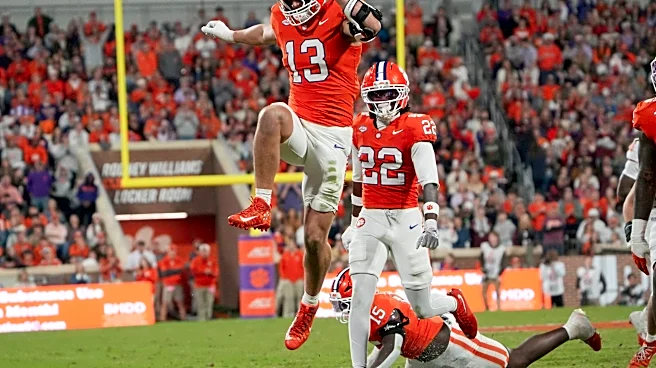
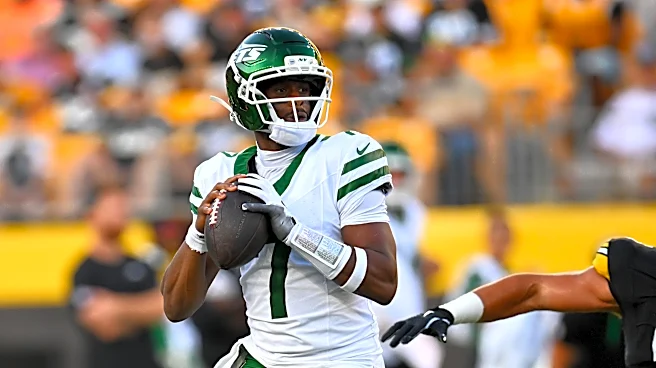
has been performing competently, with 1,913 passing yards, 12 touchdowns, and only three interceptions through eight games. Despite Smith's solid individual statistics, the team's overall performance has led to speculation regarding the playing time of rookie quarterback Cade Klubnik. Klubnik, a fourth-round pick from Clemson, showed promise during the preseason, completing 21 of 34 passes for 190 yards and demonstrating mobility that the Jets' offense currently lacks. While Smith has not been the primary issue for the team's struggles, the Jets are facing the prospect of missing the playoffs for the 16th consecutive season, prompting calls to evaluate their future at the quarterback position.
Why It's Important?
This quarterback dilemma is significant for the New York Jets as it directly impacts their strategic direction for the current season and beyond. Deciding when, or if, to bench a performing veteran like Geno Smith for a rookie like Cade Klubnik involves balancing immediate competitiveness with long-term player development. For Smith, his performance could influence future contract negotiations, either with the Jets or another team, as he aims to secure a deal in the twilight of his career. For Klubnik, gaining experience this season would be crucial for his development and could determine if the Jets need to invest high draft capital in a quarterback in the 2027 NFL Draft, where they hold three first-round picks. The decision also affects team morale and fan engagement, as a switch could signal a shift from competing for the current season to building for the future. The outcome will shape the Jets' offensive identity and their approach to roster construction in the coming years.
What's Next?
The immediate future for the New York Jets' quarterback situation hinges on the team's performance in upcoming games and their playoff aspirations. As long as the Jets maintain any realistic hope for a playoff berth, Geno Smith is expected to remain the starting quarterback, given his current performance and veteran experience. However, if the team continues to lose, particularly in their next two games, and Smith's performance declines, there is a possibility that Cade Klubnik could see his first start as early as Week 11 against the Chargers. A more probable scenario, according to some analyses, is that Klubnik will get his opportunity in Week 15 against the Cardinals, by which point the Jets are likely to be out of playoff contention. This would allow Klubnik to gain valuable NFL experience against a struggling opponent and provide the front office with an evaluation of his potential before the offseason.
Beyond the Headlines
Beyond the immediate on-field implications, the Jets' quarterback decision reflects a broader organizational philosophy regarding team building and player development. The reluctance to immediately bench a veteran who is not performing poorly, even amidst a losing season, highlights a commitment to maintaining competitive integrity as long as possible. Conversely, the eventual decision to play Klubnik would signal a strategic pivot towards evaluating future talent and potentially sacrificing short-term results for long-term gains. This situation also underscores the pressure on NFL franchises to develop drafted quarterbacks, especially those taken in the mid-rounds, to avoid constantly cycling through free-agent veterans or expending high draft picks on the position. The handling of Klubnik's rookie season will be a critical test of the Jets' player development program and their ability to cultivate homegrown talent, which is essential for sustained success in the NFL.