



What's Happening?
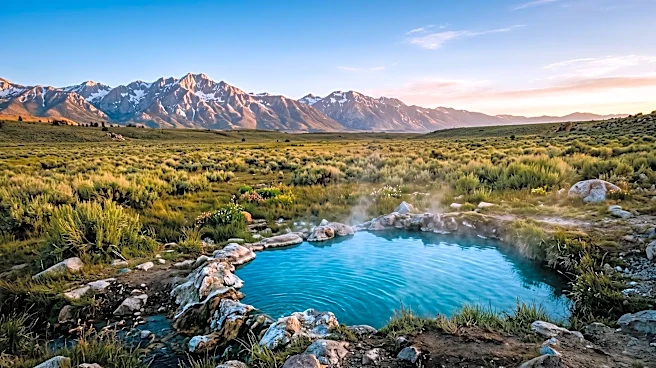
Northern California is home to a variety of hot springs, ranging from free natural pools to structured wellness resorts, catering to different preferences for relaxation and rejuvenation. These locations, often featuring mineral-rich waters, are promoted
for their healing and calming properties. Options include landmark resorts like Vichy Springs Resort in Ukiah, known for its carbonated springs, and Wilbur Hot Springs, an off-the-grid sanctuary with Japanese-style flumes. Other notable sites include Orr Hot Springs, a rustic clothing-optional retreat, and Harbin Hot Springs, which has been rebuilt after fires. For those seeking more remote experiences, Sykes Hot Springs near Big Sur and Wild Willy's Hot Springs in Mammoth Lakes offer natural, free soaking spots accessible via hikes. The region also provides unique experiences such as the clothing-optional Sierra Hot Springs Resort and the secluded Surprise Valley Hot Springs, which is adults-only and pet-friendly.
Why It's Important?
The prevalence of diverse hot springs in Northern California highlights a significant aspect of the region's wellness tourism industry. These natural attractions contribute to the local economy by drawing visitors seeking health, relaxation, and unique travel experiences. The range of options, from luxurious resorts to free, rustic springs, makes wellness accessible to a broad demographic, supporting both high-end tourism and more budget-conscious travelers. The emphasis on mineral-rich waters and their purported healing properties taps into a growing demand for natural health remedies and stress reduction. Furthermore, the existence of clothing-optional and off-the-grid locations reflects a cultural trend towards alternative wellness practices and a desire for disconnection from modern stressors, impacting local hospitality and service sectors.
What's Next?
As the demand for wellness tourism continues to grow, Northern California's hot springs are likely to see continued investment in infrastructure and marketing to attract more visitors. Resorts may expand their offerings to include more holistic treatments, workshops, and eco-friendly initiatives to appeal to a health-conscious and environmentally aware clientele. Remote and free hot springs will likely face ongoing challenges in managing visitor impact and maintaining their natural integrity, potentially leading to increased regulations or conservation efforts. Local communities and businesses will need to adapt to the influx of tourists, balancing economic benefits with environmental preservation and community well-being. The diverse appeal of these hot springs suggests a sustained role in the regional tourism landscape, with potential for further development in niche wellness markets.
Beyond the Headlines
Beyond their immediate appeal as tourist destinations, Northern California's hot springs represent a deeper connection to natural resources and historical wellness practices. Many of these sites have been utilized for centuries, some by Native Americans, for their therapeutic qualities, embedding them within a rich cultural and historical context. The concept of 'healing waters' taps into ancient beliefs about nature's restorative power, offering a counter-narrative to modern medicine. The existence of clothing-optional resorts also reflects a broader cultural acceptance of body positivity and naturalism within specific wellness communities. These locations serve as spaces for introspection, community building, and a return to simpler, more primal forms of relaxation, highlighting a societal yearning for authenticity and escape from the complexities of contemporary life. The balance between commercial development and preserving the natural, often sacred, character of these springs will be a continuous ethical and environmental consideration.