





What's Happening?
Jimmy Kimmel Live! has significantly expanded its lead in late-night television ratings, according to Nielsen Live+3 data for the week of October 25. The show averaged 2.63 million total viewers, marking a 45% increase from the previous week. Among adults
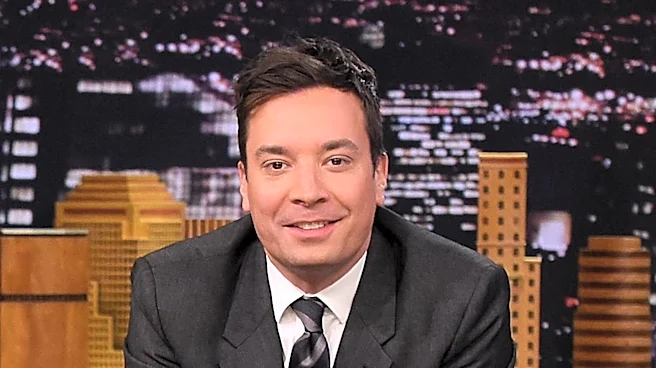
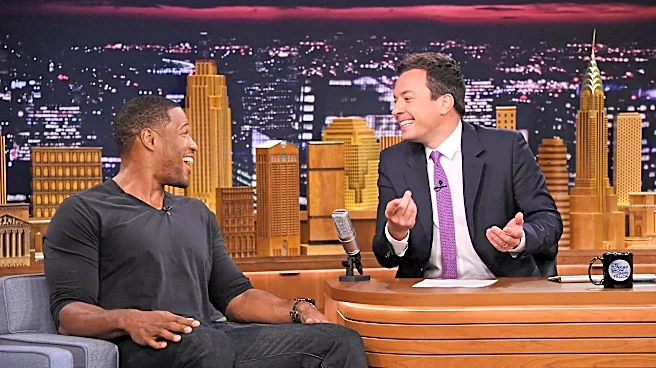
aged 18-49, viewership grew by 24% to 288,000. This surge in ratings occurred as the show returned to airing original episodes after a week-long break. The highest-rated night for Jimmy Kimmel Live! was Monday, following Monday Night Football, which garnered 3.3 million total viewers and 431,000 adults 18-49. In contrast, NBC’s The Tonight Show Starring Jimmy Fallon saw a 10% decrease in total viewers, averaging 1.30 million, and a 21% drop in the 18-49 demographic to 175,000. CBS’s Comics Unleashed also experienced a decline in viewership as Kimmel's show returned with new content.
Why It's Important?
The shift in late-night ratings highlights the competitive nature of U.S. television programming and the impact of original content on viewership. Jimmy Kimmel Live!'s substantial increase in audience numbers, particularly after a break, demonstrates the show's strong appeal and its ability to draw viewers back. This performance is crucial for ABC, as higher ratings translate to increased advertising revenue and stronger market positioning in the highly contested late-night slot. For competitors like The Tonight Show Starring Jimmy Fallon and Comics Unleashed, the decline in viewership suggests a challenge in maintaining audience engagement when up against fresh content from rivals. This trend could influence future programming decisions, content strategies, and talent acquisitions across late-night television, as networks strive to capture and retain their audience share in a fragmented media landscape.
What's Next?
The continued dominance of Jimmy Kimmel Live! in late-night ratings may prompt other networks to re-evaluate their strategies for attracting and retaining viewers. Competitors like NBC and CBS might consider adjusting their content, guest lineups, or promotional efforts to counter Kimmel's growing lead. The impact of sports programming, such as Monday Night Football, on late-night viewership is also evident, suggesting that strategic scheduling and lead-ins could become more critical. As the late-night landscape evolves, networks will likely continue to experiment with different formats and digital distribution methods to reach broader audiences beyond traditional linear television, especially given that linear ratings represent only a portion of the total viewing audience.
Beyond the Headlines
The fluctuating ratings in late-night television reflect broader changes in media consumption habits in the U.S. While linear television remains a significant platform, the increasing importance of streaming services, YouTube, and other social media platforms means that traditional viewership metrics only tell part of the story. The ability of shows like Jimmy Kimmel Live! to leverage events like Monday Night Football for a ratings boost underscores the enduring power of live programming. However, the long-term success of late-night shows will increasingly depend on their ability to create engaging content that resonates across multiple platforms and appeals to diverse demographics, moving beyond conventional broadcast schedules to capture a wider digital audience.