




What's Happening?
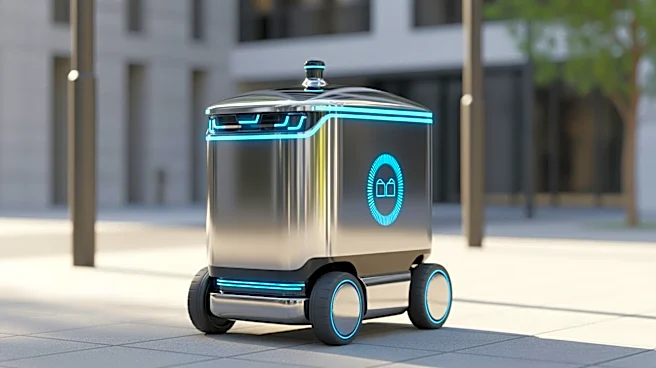
Uber Eats has launched a new autonomous delivery service in Arlington, Virginia, using self-driving robots developed by Avride. These robots, which began testing in the Rosslyn-Ballston corridor in April, are now operational from 10 a.m. to 10 p.m. at participating
restaurants. Customers can choose between a robot or a human courier for their deliveries. The robots are designed to enhance delivery safety and efficiency, navigating sidewalks at a maximum speed of 5 mph using cameras and LiDAR. They are spacious enough to carry multiple large items and are programmed to wait in building lobbies for customer pickup.
Why It's Important?
The introduction of self-driving delivery robots marks a significant advancement in the logistics and delivery industry. For Uber Eats, this technology could reduce delivery costs and improve service efficiency, potentially leading to lower prices for consumers. The use of autonomous robots also aligns with broader trends towards automation and innovation in urban environments. However, this development raises questions about the impact on employment for human delivery drivers and the need for regulatory frameworks to ensure the safe integration of robots into public spaces.
What's Next?
As Uber Eats expands its autonomous delivery service, it will likely explore additional markets and refine its technology to enhance performance and reliability. The company may also face regulatory challenges as it seeks to comply with local laws governing the use of autonomous robots. The success of this initiative could encourage other delivery services to adopt similar technologies, further transforming the logistics landscape. Additionally, public acceptance and adaptation to autonomous delivery systems will be crucial for the widespread adoption of this technology.