






What's Happening?
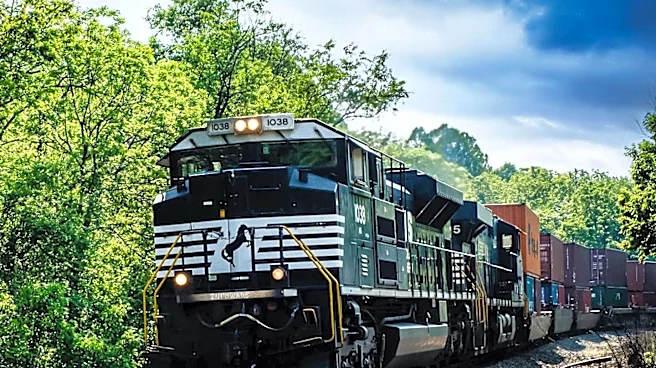
Norfolk Southern Corporation, a major U.S. freight railroad, is celebrating 200 years of railroading history, marking its roots back to the beginnings of America's industrial economy. The company announced its 'GeneratioNS' campaign, which includes the unveiling
of the 'NS 200 Locomotive series' and a series of community events. The first commemorative locomotive, No. 4980, named 'The 1827,' has been revealed, with two more planned. These locomotives will be used in freight service across the railroad's 22-state network. The campaign aims to highlight the railroad's historical contributions to connecting communities, supporting businesses, and driving the nation's economy. Norfolk Southern President and CEO Mark George emphasized the role of generations of railroaders in building the industry and carrying its legacy forward. The company also continues its partnerships with the Atlanta History Center and the Virginia Museum of History & Culture to preserve and share its extensive heritage.
Why It's Important?
Norfolk Southern's 200-year anniversary celebration underscores the enduring significance of railroads as a foundational element of the U.S. economy and infrastructure. Reaching two centuries of operation places Norfolk Southern among a select group of American companies with deep historical ties to the nation's industrial development. The 'GeneratioNS' campaign and the commemorative locomotives serve as a powerful reminder of the critical role rail transport has played, and continues to play, in connecting markets, strengthening supply chains, and facilitating economic growth across the country. This celebration also highlights the continuous evolution of the rail industry, from its early tracks to today's modern freight network. For the U.S., a robust rail system is vital for the efficient movement of goods, supporting various industries from agriculture to manufacturing, and contributing to overall economic stability and competitiveness. The preservation of this history through partnerships with cultural institutions ensures that future generations understand the profound impact of railroading on American society.
What's Next?
Norfolk Southern plans to expand its anniversary celebrations with the 'Norfolk Southern Heritage Days' tour, starting in Spring 2027. This tour will involve events across its network, offering employees, customers, and the public opportunities to engage with the railroad's history and view the 'NS 200 Locomotive series' firsthand. These events will be hosted in locations significant to railroading history, further connecting the company with the communities it serves. The 'GeneratioNS' campaign will also continue through employee storytelling, historical content, and digital experiences, linking the company's past with its future. Additionally, Norfolk Southern will persist in its collaborations with the Atlanta History Center and the Virginia Museum of History & Culture to preserve and share its archives, ensuring its rich history is accessible for generations to come. These initiatives aim to reinforce the company's legacy while looking towards future innovations in rail transport.
Beyond the Headlines
The celebration of Norfolk Southern's 200-year history extends beyond corporate milestones, touching upon the broader narrative of American industrialization and progress. The company's journey reflects the nation's growth, from opening new markets in the early days to supporting modern supply chains. This historical perspective highlights the long-term impact of infrastructure development on societal advancement and economic prosperity. The emphasis on 'GeneratioNS' also subtly acknowledges the human element—the countless individuals who have contributed to the rail industry over two centuries. This focus on heritage and community engagement can foster a deeper appreciation for the often-unseen labor and innovation that underpin the nation's transportation system. Furthermore, by showcasing its history, Norfolk Southern reinforces its identity as a cornerstone of American commerce, potentially influencing public perception and policy discussions regarding the future of freight rail and its role in a sustainable economy.