



What's Happening?
Pilates is a mind-body exercise method that focuses on stabilizing and strengthening the core, improving strength, flexibility, endurance, and posture without building bulk or stressing joints. Developed by Joseph Pilates, the method emphasizes controlled
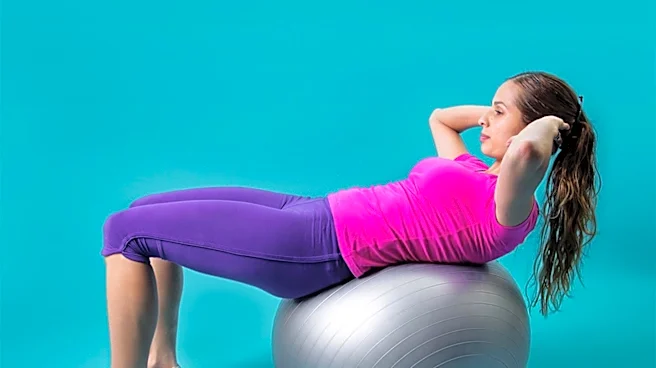
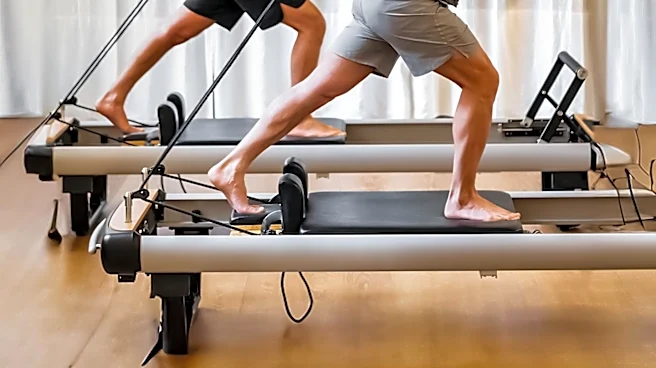
movements, breathing, and precise alignment. It can be performed on a mat, using bodyweight as resistance, or with specialized equipment like a reformer, which utilizes a sliding carriage, springs, straps, and bars to provide adjustable resistance and support. Pilates is known for its low-impact nature and its ability to address issues such as stress and back pain. The practice involves repetitive exercises that engage deep core muscles and smaller stabilizing muscles often overlooked in other workouts. While mat Pilates relies on body awareness and instructor guidance, reformer Pilates offers equipment-guided movement, making it adaptable for various fitness levels and rehabilitation needs. Both forms adhere to the same core principles, with the reformer being one of Joseph Pilates' original inventions for rehabilitation.
Why It's Important?
Pilates offers significant benefits for a wide range of individuals, from those seeking general fitness to those in injury rehabilitation or older adults aiming to maintain mobility. Its emphasis on core strength and stability is crucial for improving posture, which is a common health concern globally. By strengthening deep core muscles, Pilates can alleviate back pain and enhance overall body mechanics. The method's focus on flexibility and strength, rather than just one, contributes to a greater range of motion and reduced risk of injury. For athletes, Pilates can build core control and joint-friendly muscular endurance, complementing cardio workouts and improving performance. The adaptability of Pilates, through mat work or reformer use, makes it accessible to diverse populations, including post-partum mothers, older individuals, and those with injuries, as it provides a sustainable and gentle yet effective workout. This broad applicability underscores its importance as a versatile fitness solution for enhancing physical well-being and quality of life.
What's Next?
The continued growth and adaptation of Pilates are evident in its integration into various fitness settings and specialized programs. Studios are increasingly offering both mat and reformer classes, often side-by-side, to cater to different preferences and budgets. The development of hybrid programs that combine Pilates with other fitness modalities, such as cardio or weight training, suggests a trend towards more comprehensive and varied workout experiences. Furthermore, the use of props and innovative movements in contemporary Pilates classes indicates an ongoing evolution of the practice to keep it engaging and effective. For individuals, the next step often involves trying both mat and reformer Pilates to determine which format best suits their personal goals and preferences. The accessibility of beginner-level classes and the option for modifications mean that more people can safely explore Pilates, potentially leading to increased participation and a broader understanding of its benefits.
Beyond the Headlines
Beyond its immediate physical benefits, Pilates fosters a deeper connection between mind and body, promoting body awareness and control. This aspect is particularly significant in an era where many fitness routines prioritize intensity over mindful movement. The method's focus on precision and controlled execution encourages individuals to understand their body's mechanics, which can translate into improved movement patterns in daily life and other physical activities. Ethically, Pilates promotes a sustainable approach to fitness, emphasizing longevity and injury prevention rather than short-term, high-impact results. This aligns with a growing societal interest in holistic health and well-being. The historical context of Pilates, originating from Joseph Pilates' work during World War One for rehabilitation, highlights its foundational role in restorative movement, making it a valuable tool for addressing chronic pain and physical limitations. Its continued relevance nearly a century later speaks to its enduring effectiveness and adaptability.