
What's Happening?
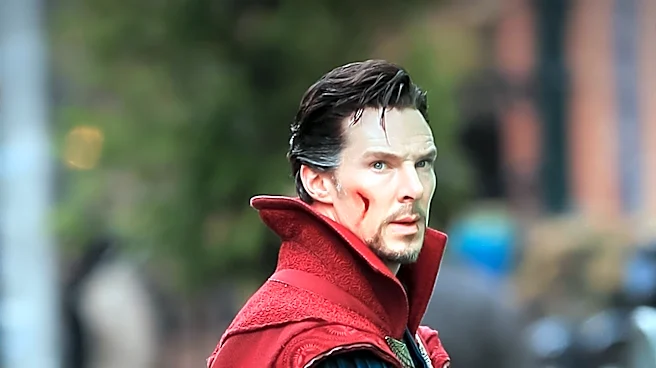
Benedict Cumberbatch, known for his role as Doctor Strange, also provided the voice and motion-capture for the inter-dimensional entity Dormammu in the Marvel Cinematic Universe (MCU). This dual role in the film 'Doctor Strange' was a deliberate choice
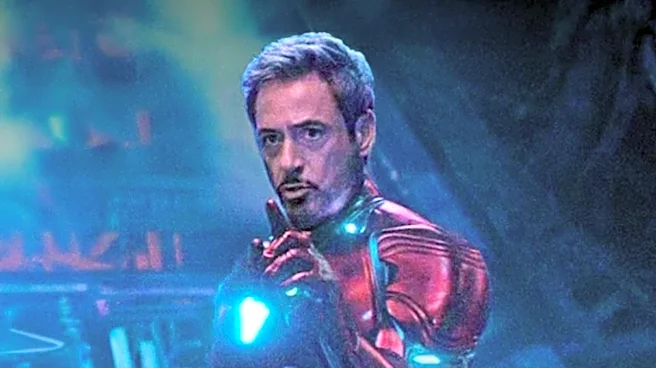
to emphasize Dormammu as a dark reflection of the titular hero. Marvel Studios even delayed the production of 'Doctor Strange' from summer 2016 to the fall to accommodate Cumberbatch's schedule, as he was committed to a production of 'Hamlet'. Beyond these two characters, Cumberbatch has also portrayed various multiversal versions of Doctor Strange, further expanding his presence within the MCU. This practice of actors playing multiple characters, sometimes unrelated, is not uncommon in the MCU, with other examples including Linda Cardellini as Laura Barton and Lylla the Otter, and Paul Bettany as J.A.R.V.I.S., Vision, and White Vision.
Why It's Important?
The strategic decision by Marvel to cast Benedict Cumberbatch in dual roles, particularly as both Doctor Strange and Dormammu, highlights a creative approach to character development and narrative depth within the MCU. By having the same actor portray both the hero and a significant villain, the filmmakers aimed to visually and thematically link the characters, suggesting a profound connection or a 'dark reflection.' This choice can enhance the audience's understanding of the hero's internal struggles and the nature of the threats they face. Furthermore, Marvel's willingness to adjust production schedules to secure specific talent, as seen with Cumberbatch and 'Hamlet,' underscores the studio's commitment to casting choices they believe are essential for the success and authenticity of their films. This approach can influence industry standards for talent acquisition and creative flexibility in major film franchises.
What's Next?
The precedent set by Benedict Cumberbatch's multiple roles in the MCU, particularly the portrayal of various multiversal Doctors Strange, suggests a continued exploration of alternate realities and character variants within the franchise. As the MCU delves deeper into the multiverse concept, it is likely that audiences will see more actors taking on different versions of their established characters or even entirely new ones. This could lead to more complex narrative structures and opportunities for actors to showcase their versatility. Future MCU projects may continue to leverage this strategy to introduce new dimensions to existing characters and expand the lore, potentially influencing casting decisions and storytelling techniques across the superhero genre.
Beyond the Headlines
The casting of a single actor for multiple roles, especially when one is a hero and the other a villain, can offer a unique psychological layer to the storytelling. It can symbolize the hero's internal conflict or the idea that good and evil are two sides of the same coin. This artistic choice challenges traditional casting norms and can lead to deeper thematic interpretations by the audience. Ethically, it raises questions about the actor's workload and the potential for typecasting, though in Cumberbatch's case, the roles were distinct enough to avoid this. Culturally, such decisions can become iconic, with fans dissecting the nuances of each portrayal and the implications for the broader narrative, contributing to the rich tapestry of modern cinematic mythology.