


What's Happening?
The National Football League (NFL) has acknowledged a significant officiating mistake from a Week 5 game where a penalty was incorrectly assessed against Buccaneers defensive lineman Calijah Kancey. According to NFL officiating and rules analyst Walt
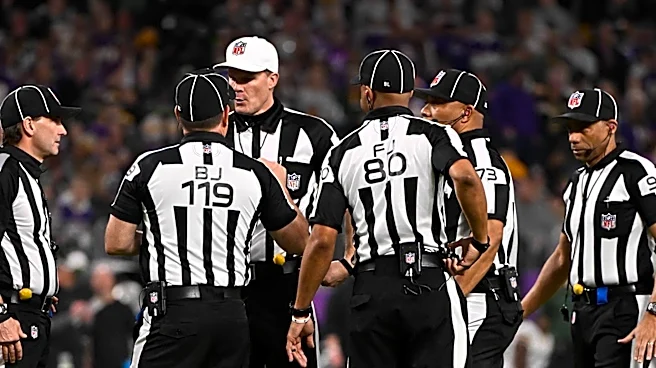
Anderson, the 'illegal hands to the face' foul was actually committed by Cowboys guard Tyler Booker. Despite Booker being the offending player, the penalty was mistakenly called on Kancey, leading to yardage being stepped off against the Buccaneers. Anderson stated that the league's officiating office should have immediately corrected such a blatant error, especially given that the only action relative to hands was by the offensive player, not the defensive player who was penalized. Kancey reportedly recognized the incorrect call at the time, but players have no recourse to rectify such in-game errors.
Why It's Important?
This admitted officiating error highlights ongoing concerns about the accuracy and real-time correction capabilities within NFL game management. Such mistakes can directly influence game outcomes, affecting team standings, playoff implications, and even player statistics. For the Buccaneers, an incorrectly assessed penalty means a loss of yardage and potentially momentum, which could be critical in a close game. For players like Calijah Kancey, being wrongly penalized can impact their professional record and reputation. The incident also raises questions about the effectiveness of the New York officiating office, which, according to Anderson, could have intervened to correct the call but failed to do so. This situation underscores the need for robust review mechanisms to ensure fair play and maintain the integrity of the sport, especially when objective information is available to correct clear errors.
What's Next?
While the NFL has admitted the error, there is no indication of a reversal of the penalty or any direct consequence for the game's outcome. The league's Competition Committee has instructed officials that if objective information, such as asking officials for clarification on player numbers, can assist in correcting a call, it should be utilized. This suggests a potential emphasis on better communication and verification processes during games to prevent similar misidentifications. However, the incident may fuel further discussions among teams, coaches, and the NFL Players Association regarding the implementation of more immediate and effective in-game review protocols for clear and obvious officiating errors, particularly those involving player identification for penalties. The focus will likely remain on improving the consistency and accuracy of officiating decisions moving forward.
Beyond the Headlines
The misidentification of a player for a penalty, as seen with Tyler Booker and Calijah Kancey, touches upon broader ethical considerations in professional sports. Beyond the immediate impact on a game's score, such errors can erode public trust in the fairness of competition. It also brings to light the immense pressure on on-field officials and the limitations of real-time decision-making in a fast-paced environment. The NFL's admission, while transparent, also underscores the challenge of rectifying errors after the fact, especially when they have already influenced the flow and outcome of a game. This incident could contribute to ongoing debates about expanding the scope of replay reviews or implementing technology-assisted officiating to minimize human error and ensure that the correct players are held accountable for their actions on the field.