







What's Happening?
Robert Pattinson has officially landed the role of James Bond, reportedly securing a highly favorable deal with Amazon MGM Studios. This casting follows a competitive selection process where Pattinson, already a prominent actor known for his role as Batman,
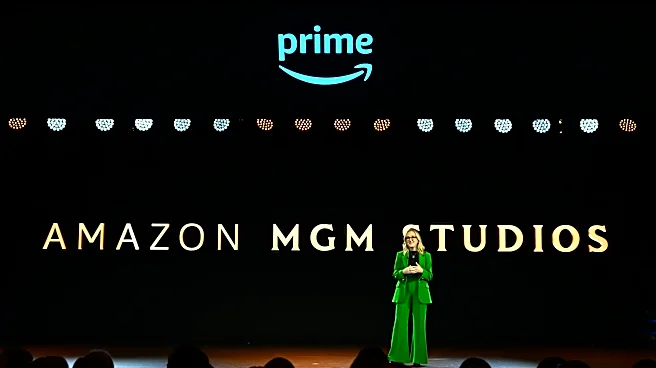
emerged as the top choice. Entertainment attorney Karl Austen and Puck's Matt Belloni discussed the details of the 'test deal' process, which is a contract actors sign before screen testing for major roles, locking in terms if they get the part. Belloni confirmed that Amazon MGM Studios 'paid him a lot more' than other candidates, acknowledging Pattinson's star power. Furthermore, Pattinson's deal is for three James Bond films, a shorter commitment compared to the four-film deals offered to less established actors who were also considered for the role. This move signifies a new era for the Bond franchise under Amazon MGM's creative control, which was established after Amazon acquired MGM in 2022 and later gained full creative oversight in early 2025 through a joint venture.
Why It's Important?
This development is significant for the entertainment industry, particularly for Amazon MGM Studios and the future of the James Bond franchise. By securing a major star like Robert Pattinson, Amazon MGM is signaling its intent to invest heavily in the franchise and leverage established talent to ensure its continued success. The substantial financial commitment and the shorter film deal for Pattinson highlight a shift in how studios are negotiating with top-tier actors, prioritizing star power and marketability over cost-saving measures. This could set a precedent for future high-profile castings in major franchises, potentially leading to more lucrative deals for established actors. For Pattinson, this role solidifies his position as one of Hollywood's leading men, offering him another iconic franchise to anchor his career, potentially impacting his future projects, including the likelihood of a third Matt Reeves Batman movie. The decision also underscores Amazon MGM's strategic approach to maximizing its return on the $8.45 billion acquisition of MGM, with the Bond franchise being a key asset.
What's Next?
With Robert Pattinson officially cast as James Bond, the next steps will likely involve pre-production for the first film in his three-movie deal. Director Denis Villeneuve, who reportedly championed Pattinson for the role, will likely begin working closely with the actor and the studio on the creative direction of the new Bond era. The focus will be on developing a fresh narrative and aesthetic for the character, distinguishing it from previous iterations while maintaining the franchise's core appeal. Industry observers will be watching closely to see how Pattinson's portrayal of Bond is received by audiences and critics, as well as the box office performance of his inaugural film. This casting also raises questions about Pattinson's future with the Batman franchise, as his commitment to Bond may reduce the likelihood of a third Matt Reeves Batman movie. The success of this new Bond era will be crucial for Amazon MGM Studios, validating their significant investment and strategic shift in creative control.
Beyond the Headlines
The casting of Robert Pattinson as James Bond, coupled with the reported financial terms, reflects a broader trend in the entertainment industry where established intellectual properties are increasingly relying on globally recognized stars to drive audience engagement and secure box office success. This strategy, while costly, aims to mitigate risks associated with launching new iterations of beloved franchises. The shift in creative control of the Bond franchise to Amazon MGM Studios, following their acquisition of MGM, also highlights the evolving landscape of Hollywood, where streaming giants are consolidating power and influencing traditional film production. This move could lead to more integrated content strategies, potentially leveraging the Bond brand across various Amazon platforms. Furthermore, the negotiation tactics, such as offering a shorter film commitment to a major star, indicate a growing flexibility in contract structures to attract top talent, potentially reshaping standard industry practices for franchise roles. The decision to prioritize a 'name' star over a potentially cheaper, lesser-known actor also speaks to the perceived value of star power in today's competitive global entertainment market.