






What's Happening?
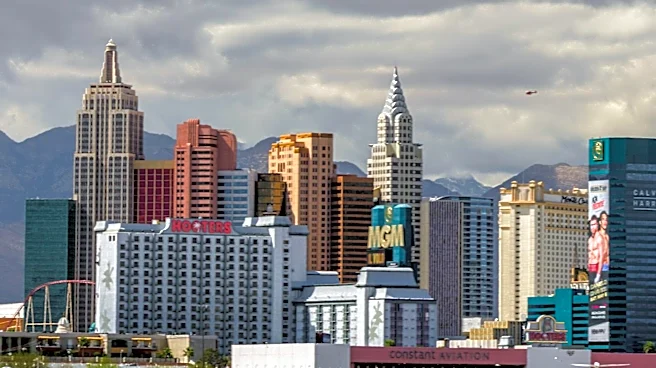
MGM Resorts experienced a decline in pricing power on the Las Vegas Strip during late summer, primarily due to increased travel costs. The company, which controls 40% of the hotel rooms on the Strip, observed a softening in visitation as expensive flights
and gasoline prices impacted room rates. This negative trend deepened throughout the third quarter before showing some easing in October. CEO Bill Hornbuckle stated that 'We're going to need relief on fuel, gas, and airline pricing' to improve the situation. Chief Financial Officer Jonathan Halkyard detailed the sliding performance, noting that July room rates were roughly flat compared to the previous year, indicating a significant slowdown in growth.
Why It's Important?
The reported loss of pricing power by MGM Resorts in Las Vegas highlights the significant impact of external economic factors, such as fuel and airline costs, on the hospitality and tourism industry. As a major player on the Las Vegas Strip, MGM's performance is a key indicator for the broader U.S. leisure and entertainment sector. Rising travel expenses can deter potential visitors, leading to reduced demand for hotel rooms, entertainment, and dining, which in turn affects revenue and profitability for businesses in tourist destinations. This situation underscores the vulnerability of the travel industry to fluctuations in energy prices and transportation costs, potentially impacting employment and local economies reliant on tourism.
What's Next?
MGM Resorts will likely continue to monitor fuel, gas, and airline pricing closely, as relief in these areas is deemed crucial for regaining pricing power. The company may explore strategies to mitigate the impact of high travel costs, such as offering promotional packages, enhancing loyalty programs, or adjusting operational costs. The easing of the situation in October suggests a potential for recovery, but sustained improvement will depend on broader economic trends affecting consumer discretionary spending and travel affordability. Other hospitality providers in Las Vegas and similar tourist destinations will also be observing these trends and may adapt their own pricing and marketing strategies in response to the evolving travel cost landscape.
Beyond the Headlines
The challenges faced by MGM Resorts in Las Vegas reveal a deeper economic tension: the balance between consumer demand for leisure travel and the rising cost of living and transportation. This situation could lead to a shift in travel patterns, with consumers potentially opting for closer-to-home destinations or reducing the frequency and duration of their trips. The reliance of major tourist hubs like Las Vegas on affordable travel highlights their susceptibility to global economic pressures, particularly those affecting energy markets. This scenario also raises questions about the long-term sustainability of growth in destinations heavily dependent on air travel, prompting a potential re-evaluation of infrastructure and marketing strategies to attract a more localized or resilient visitor base.