







What's Happening?
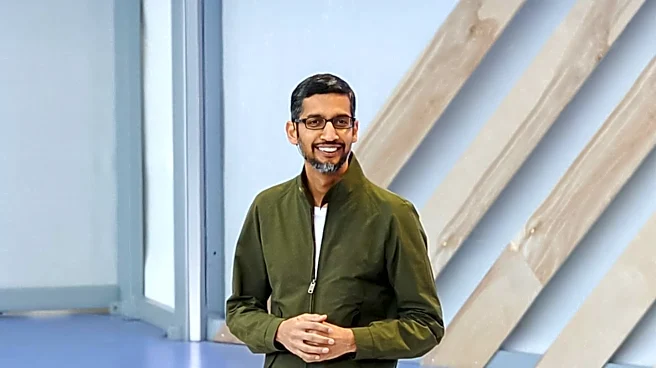
Sundar Pichai, the CEO of Google and Alphabet, recently shared his reflections on the significant role IIT Kharagpur played in shaping both his professional career and personal life. In a message commemorating the institute's 75th anniversary, Pichai highlighted
India's potential for innovation, particularly in the evolving landscape of technology. He reminisced about his time as a student, recalling late-night studies, friendships, and notably, meeting his wife, Anjali, on campus. Pichai emphasized that his years at IIT Kharagpur provided a foundational path that ultimately led him to his current leadership role at Google. He also expressed optimism about the future contributions of IIT Kharagpur students, especially as artificial intelligence becomes more integrated into daily life across various professions.
Why It's Important?
Pichai's reflections underscore the global impact of Indian educational institutions like IIT Kharagpur in fostering talent that leads major U.S. technology companies. His emphasis on India's innovative potential and the role of its younger generation in the future of AI highlights the country's growing significance in the global tech ecosystem. For the U.S. technology sector, this perspective reinforces the importance of international talent pipelines and collaborative innovation. As AI continues to advance, Pichai's vision suggests that contributions from diverse global backgrounds, including those from India, will be crucial for driving technological progress and addressing complex challenges. This also signals continued investment and focus on AI development by Alphabet, a key player in the U.S. economy.
What's Next?
Looking ahead, Pichai anticipates that IIT Kharagpur and its students will play an increasingly vital role in technological advancements, especially in artificial intelligence. He foresees AI being widely adopted across various sectors, including healthcare, agriculture, government, and entrepreneurship. Pichai's optimism is partly fueled by his interactions with young innovators, such as the Gemini Student Ambassadors from India, who are enthusiastic about leveraging technology for societal improvement. This suggests a continued focus by Google and Alphabet on nurturing AI talent globally and exploring applications that can benefit diverse populations. Future initiatives may involve further collaborations with educational institutions and support for AI-driven projects originating from India.
Beyond the Headlines
Pichai's personal narrative extends beyond a simple corporate message, touching upon the profound influence of educational environments on individual trajectories and global technological leadership. His story highlights the enduring value of foundational education and personal connections forged during formative years. Ethically, it reinforces the idea that technological progress is deeply intertwined with human development and personal experiences. Culturally, it showcases the cross-cultural flow of talent and ideas that shape the global tech industry, with individuals from diverse backgrounds rising to lead major U.S. corporations. This narrative also subtly emphasizes the long-term impact of academic institutions in producing leaders who not only drive economic growth but also envision the future of technology.