





What's Happening?
Lambda, an AI infrastructure company, has announced the deployment of what it claims is the first large-scale network utilizing co-packaged optics. This new infrastructure is housed in a Quebec data center operated by QScale and integrates over 10,000
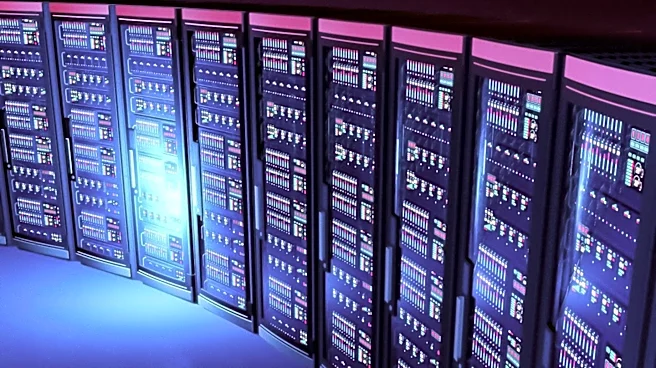
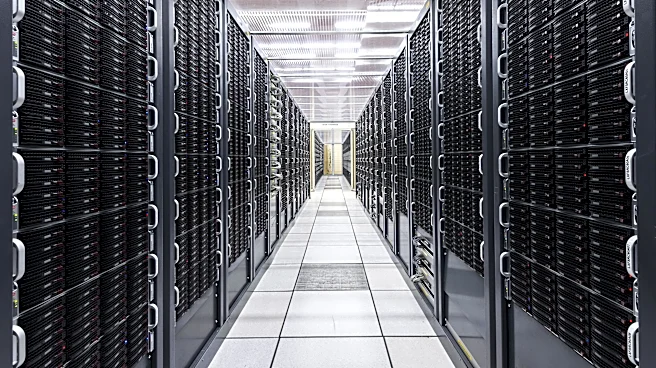
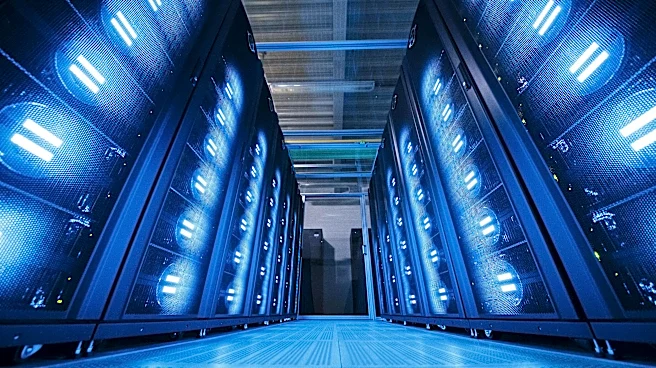
GPUs, specifically Nvidia GB300 NVL72 systems, linked by Nvidia Photonics switches. The core innovation lies in co-packaged optics, which place optical engines directly beside the switch chip, significantly shortening the electrical path from inches to millimeters. This design aims to reduce power consumption and enhance reliability by minimizing points of failure. Traditional switches convert electrical signals to light via pluggable optical modules, whereas co-packaged optics integrate this conversion more closely. Tests conducted by Lambda indicate a reduction in network latency by approximately four percent at the rack level and up to ten percent across a pod. Nvidia also suggests that its photonics technology can cut network power and boost reliability by up to 15 times. The QScale facility, which hosts this deployment, boasts 142MW capacity, primarily uses renewable energy, and employs free cooling for a significant portion of the year.
Why It's Important?
This technological advancement by Lambda is significant for the artificial intelligence industry, particularly in the context of large-scale AI model training and development. The reduction in network latency and power consumption, even if modest in percentage, translates into substantial operational efficiencies and cost savings when scaled across thousands of GPUs. In AI factories, where training jobs involve immense computational loads and inter-GPU communication, even minor delays can lead to considerable idle time and increased energy expenditure. Gilad Shainer of Nvidia emphasizes that every interruption stalls training jobs and every watt counts, making improvements in network efficiency critical. This deployment represents a step towards building more robust and efficient infrastructure necessary for the next generation of AI, potentially accelerating the development of more complex and powerful AI models. Companies relying on extensive GPU clusters for AI research and deployment stand to benefit from such infrastructure, as it promises faster processing and lower operational costs, thereby impacting the competitive landscape of AI development.
What's Next?
While Lambda has deployed this advanced network, several key details remain unannounced. Neither Lambda nor QScale has specified when customers will be able to rent capacity from this new site or whether it will be integrated into Lambda’s public cloud offerings. Prospective buyers and AI developers will need to await these announcements to understand how they can access and leverage this new infrastructure. The performance claims regarding latency reduction and reliability improvements, while promising, are currently vendor-stated, and independent verification will be crucial for broader industry adoption and confidence. The success and widespread availability of this technology could influence future data center designs and AI infrastructure investments across the industry. Furthermore, the location of this significant deployment in Quebec, outside Lambda's publicly listed data center regions, suggests potential strategic expansions or partnerships that could unfold, impacting regional data center markets and renewable energy integration in high-performance computing.
Beyond the Headlines
The deployment of co-packaged optics by Lambda signifies a broader trend in the data center industry towards optimizing every component for efficiency and performance, driven by the escalating demands of AI. This move highlights the critical role of network infrastructure in unlocking the full potential of GPU clusters, moving beyond just raw computational power. The focus on reducing electrical path lengths and integrating optical components more closely reflects an engineering paradigm shift aimed at overcoming the physical limitations of traditional data transmission. This could lead to a new standard for high-performance computing networks, pushing other providers to adopt similar technologies to remain competitive. Furthermore, the choice of QScale's data center, powered largely by renewable energy, underscores a growing emphasis on sustainability within the energy-intensive AI sector. This integration of advanced technology with green energy solutions could set a precedent for future AI infrastructure development, addressing both performance needs and environmental concerns, and potentially influencing regulatory discussions around data center energy consumption.