





What's Happening?
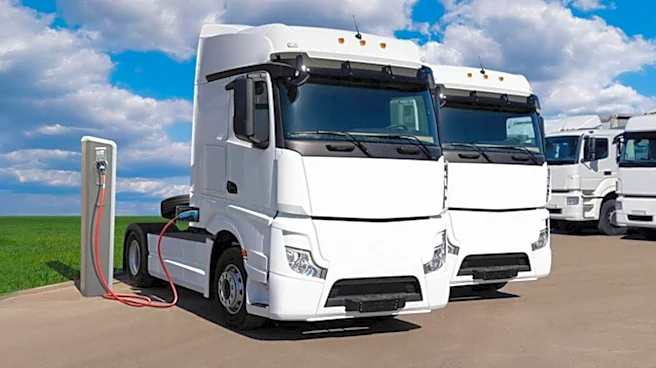
Humble Robotics, a startup focused on autonomous vehicle technology, has announced the development of a fully autonomous, cab-less electric hauling vehicle. The company, led by CEO Eyal Cohen, emerged from stealth mode in April and has secured $24 million
in investment to advance its project. The new vehicle design eliminates the traditional driver's seat and control cab, which reduces weight, improves aerodynamics, and increases cargo capacity. This innovation is part of a broader trend in the tech industry, where interest in autonomous vehicles is resurging, reminiscent of the excitement seen in 2016. Cohen, who has a background with projects like Otto and Pronto, highlights the maturity of current technologies and the intense competition for capital and engineering talent.
Why It's Important?
The introduction of fully autonomous, cab-less electric trucks by Humble Robotics could significantly impact the logistics and transportation sectors. By removing the need for a driver, these vehicles promise to enhance road safety by eliminating human error and fatigue associated with long-distance hauling. The reduction in vehicle weight and improved aerodynamics could lead to lower transportation costs, making logistics more efficient. This development is particularly relevant for countries with high transit potential, as it could transform their logistics infrastructure. The renewed investor interest and substantial funding in this sector suggest that autonomous hauling could become one of the fastest-growing markets, challenging established players like Tesla and Waymo.
What's Next?
As Humble Robotics continues to develop its autonomous electric trucks, the company will likely focus on refining both the software and hardware components to gain a competitive edge. The success of this project could prompt other companies to accelerate their own autonomous vehicle initiatives, potentially leading to increased collaboration or competition in the industry. Regulatory bodies may also need to adapt to accommodate the deployment of such vehicles on public roads, which could involve new safety standards and operational guidelines. The broader logistics industry will be watching closely to see how these innovations can be integrated into existing supply chains.
Beyond the Headlines
The shift towards autonomous electric trucks raises important ethical and legal questions, particularly concerning job displacement for truck drivers and the regulatory framework needed to ensure safety. As these vehicles become more prevalent, there will be a need for policies that address the transition for workers and ensure that the benefits of automation are equitably distributed. Additionally, the environmental impact of widespread adoption of electric vehicles could contribute to reducing carbon emissions, aligning with global sustainability goals. The integration of advanced technologies like AI and robotics into logistics also highlights the ongoing digital transformation across industries.