





What's Happening?
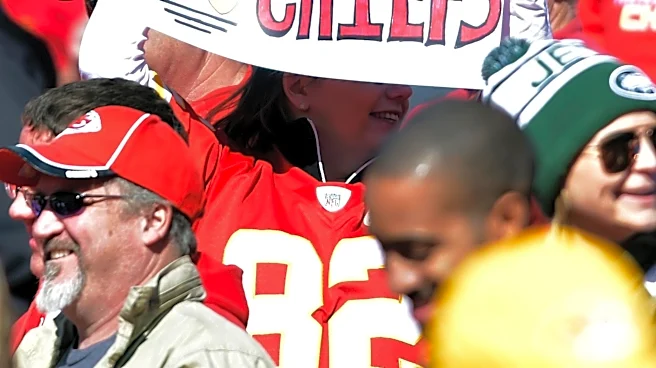
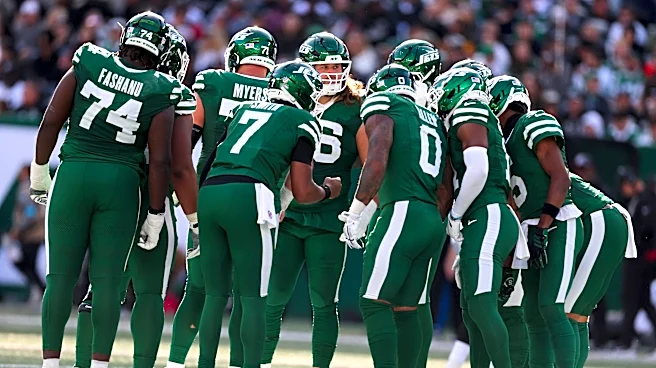
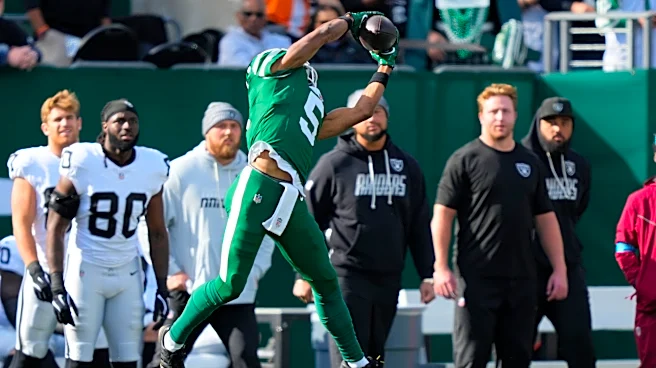
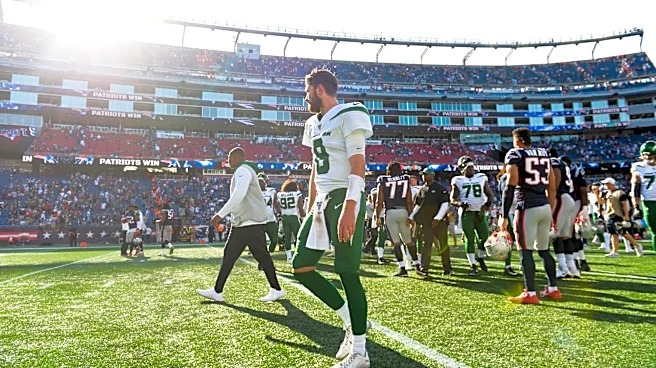
The New York Jets are experiencing a significant downturn, marked by a four-game losing streak and a 2-7 record, leading to increased scrutiny on owner Woody Johnson and head coach Aaron Glenn. The team's recent 35-12 loss to the Kansas City Chiefs highlighted
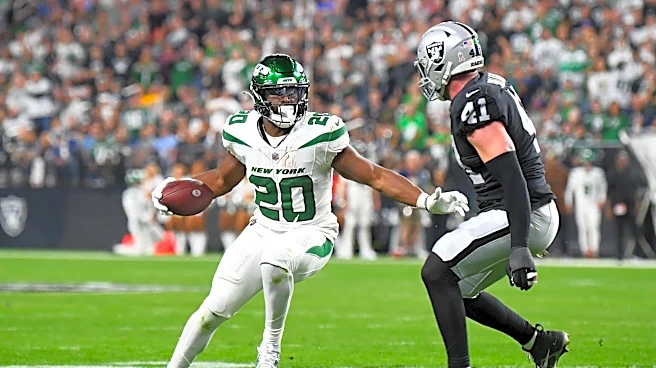
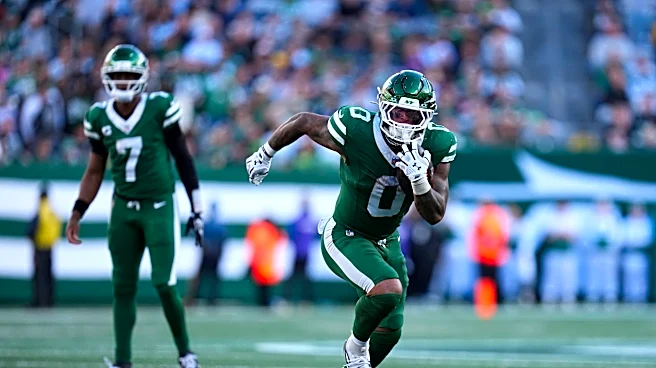
severe on-field issues, including a defensive collapse that has allowed 127 points in the last four games and an offense that has gone five consecutive quarters without a touchdown. Players are visibly frustrated, with instances of helmets being thrown on the sidelines. Despite the team's struggles and a 5-21 record under Glenn, owner Woody Johnson reportedly is not in a rush to fire the head coach. The Jets are on track for their 11th consecutive losing season and 16th year out of the playoffs, raising questions about the team's direction and leadership.
Why It's Important?
The ongoing struggles of the New York Jets have significant implications for the franchise's financial health, fan engagement, and overall brand. A prolonged period of underperformance can lead to decreased ticket sales, merchandise revenue, and local media interest, impacting the team's market value. For owner Woody Johnson, the team's consistent failure to make the playoffs and compete at a high level reflects poorly on his leadership and strategic decisions. The lack of a clear path to improvement could erode fan loyalty and create a negative perception of the organization. Furthermore, the instability at the coaching position and the reported player frustration could deter potential talent from joining the team, perpetuating a cycle of mediocrity. The situation also affects the broader NFL landscape, as a major market team like the Jets failing to perform impacts league-wide narratives and competitive balance.
What's Next?
Head coach Aaron Glenn will have the remaining eight games of the season to demonstrate that the team is moving in a positive direction, a task described as potentially insurmountable given the current performance. Owner Woody Johnson's decision not to immediately fire Glenn suggests a period of evaluation will continue through the end of the season. If the team's performance does not improve, significant changes are likely to occur in the offseason, potentially including a coaching change and roster adjustments. The team also faces the challenge of maintaining locker room morale and preventing further disintegration as the season progresses. The upcoming NFL trade deadline could also see player movements, though the Jets have reportedly been reluctant to engage in trade talks for some players. The focus will be on whether Glenn can rally the team and show any signs of progress to convince Johnson of his long-term viability.
Beyond the Headlines
The Jets' persistent struggles under Woody Johnson's ownership highlight deeper issues within the organizational culture and decision-making processes. Beyond the immediate on-field results, the lack of sustained success points to potential systemic problems in talent evaluation, coaching appointments, and strategic planning. The reluctance to make swift changes, despite years of losing, could indicate a preference for stability over immediate results, or perhaps a lack of viable alternatives. This situation can foster a culture of low expectations among fans and players, making it harder to attract top-tier talent and build a winning program. The long-term impact could be a diminished legacy for Johnson as an owner and a continued struggle for the franchise to establish itself as a competitive force in the NFL, regardless of market size or financial resources.