





What's Happening?
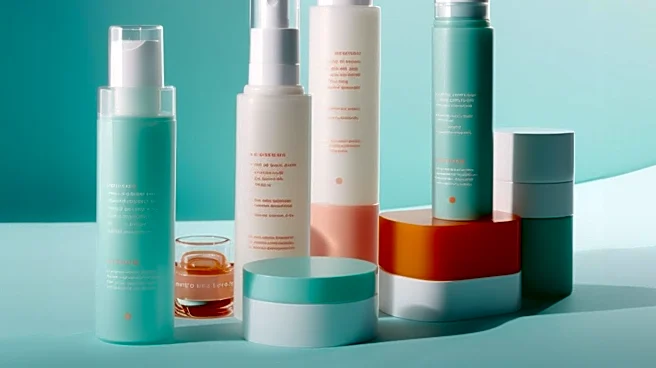
Korean beauty products, known as K-beauty, are becoming increasingly mainstream in the U.S. market. The opening of Olive Young's first U.S. store in Pasadena, California, attracted significant consumer interest, reflecting a broader trend of rising demand
for K-beauty products. U.S. sales of K-beauty have reached $2.8 billion in early 2026, marking a 48% increase from the previous year. Retailers like Target and Sephora are expanding their K-beauty offerings, while analysts predict continued growth driven by U.S. consumer demand for functional skincare products.
Why It's Important?
The growing popularity of K-beauty in the U.S. highlights a shift in consumer preferences towards skincare-focused beauty routines. This trend presents opportunities for retailers and brands to capitalize on the demand for innovative and effective beauty products. The expansion of K-beauty in the U.S. market could influence domestic beauty brands to adopt similar product strategies, potentially reshaping the beauty industry landscape. Additionally, the success of K-beauty may pave the way for other international beauty products to enter the U.S. market.
What's Next?
As K-beauty continues to gain traction, more U.S. retailers are likely to expand their offerings to include a wider range of Korean beauty products. This could lead to increased competition among beauty brands and retailers, driving innovation and potentially lowering prices. The trend may also encourage collaborations between U.S. and Korean beauty companies, further integrating K-beauty into the American market. Analysts will be watching for the impact of K-beauty's growth on the overall beauty industry, particularly in terms of pricing and consumer behavior.