



What's Happening?
Toyota Motor Corporation projects an annual expenditure of approximately $6.4 billion (1 trillion yen) starting in 2028 for a comprehensive automation initiative across its factories, group companies, and major suppliers. This investment is anticipated
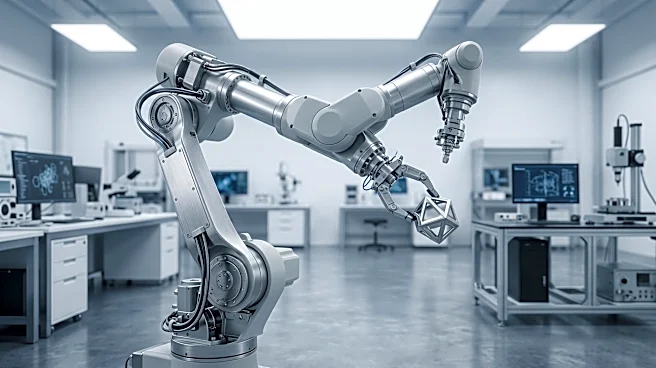
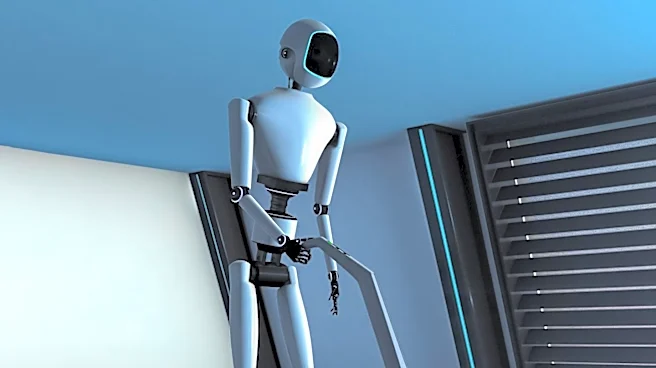
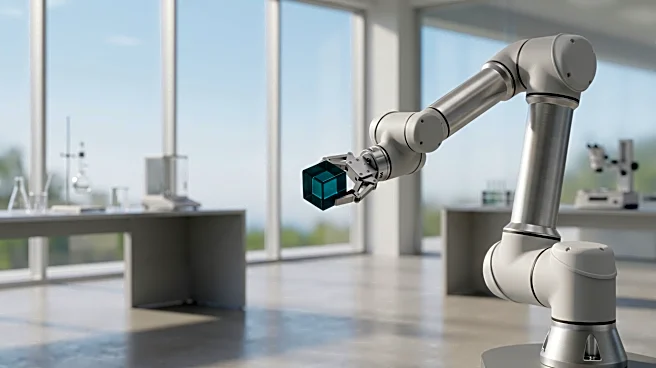
to support the deployment of around 400,000 robots, encompassing both replacement equipment and new installations. The initiative includes humanoid and non-humanoid machines, industrial robotics, automated logistics systems, and future production setups where human employees will collaborate with robots. Toyota has been exploring various levels of factory automation for years, with some projects initially automated then reverting to manual operation due to maintenance challenges in overseas facilities lacking skilled staff. The company's current strategy combines robotics development with production methods refined through manual factory work, aiming to address labor shortages and facilitate the transfer of manufacturing skills. Toyota's Frontier Research Center is actively developing robotics applications, including systems that allow robots to perceive their surroundings, learn, and optimize actions autonomously, a concept referred to as physical AI.
Why It's Important?
This significant investment by Toyota underscores a broader industry trend towards advanced automation and artificial intelligence in manufacturing, which has substantial implications for the U.S. automotive sector and its workforce. As a major player in the U.S. market, Toyota's move could set a precedent for other manufacturers, potentially accelerating the adoption of similar technologies. The focus on addressing labor shortages through robotics could impact employment patterns in manufacturing, shifting demand from manual labor to roles requiring skills in robotics maintenance, programming, and oversight. For U.S. suppliers to Toyota, this could necessitate investments in compatible automation technologies and processes. The development of 'physical AI' and robots capable of working alongside humans also signals a future where human-robot collaboration becomes more integrated, potentially increasing efficiency and productivity but also raising questions about job displacement and the need for workforce retraining. The long-term reliability and repeatable positioning accuracy of these advanced robotic systems will be crucial for their successful integration and impact on the U.S. manufacturing landscape.
What's Next?
Toyota has not yet confirmed the full scope or duration of this estimated annual spending, but discussions with investors have taken place. The company will continue to test and refine its robotics technologies, including the ELEY robot designed for physical interaction and the application of reinforcement learning to humanoid robotics. Future tests will involve placing these robots in environments closer to actual production settings to gather data for training and to bridge the 'Sim2Real gap'—the discrepancy between simulated and real-world performance. The success of these trials will determine the pace and extent of large-scale deployment. Other automotive manufacturers and related industries in the U.S. will likely monitor Toyota's progress closely, potentially influencing their own automation strategies. The development of robust data infrastructure for training robots from repeated physical interactions will be a key next step in ensuring the effectiveness and adaptability of these advanced systems.
Beyond the Headlines
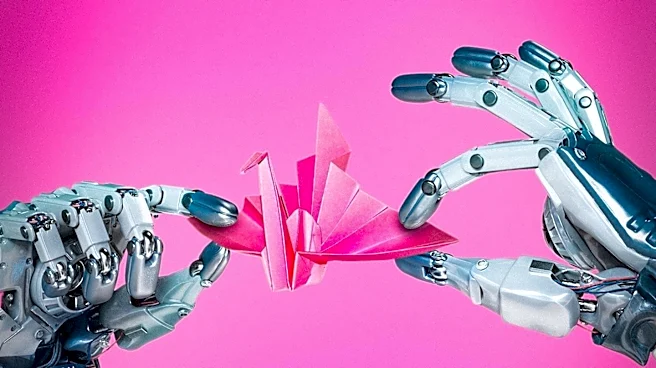
Toyota's substantial investment in robotics and physical AI extends beyond mere efficiency gains, touching upon profound ethical and societal considerations. The integration of 400,000 robots, including those designed for human-robot collaboration, raises questions about the future of human labor in manufacturing. While Toyota aims to address labor shortages, the long-term impact on job creation and the nature of work in the U.S. could be transformative. There's a potential for a shift towards higher-skilled jobs in robotics development, maintenance, and supervision, necessitating significant investment in education and training programs to prepare the workforce. Furthermore, the development of 'physical AI' that allows robots to perceive, learn, and act autonomously introduces complex ethical dilemmas regarding accountability, decision-making in unforeseen circumstances, and the potential for bias in learned behaviors. The 'Sim2Real gap' highlights the ongoing challenge of translating theoretical AI capabilities into reliable real-world applications, underscoring the need for rigorous testing and validation to ensure safety and effectiveness in industrial settings.