





What's Happening?
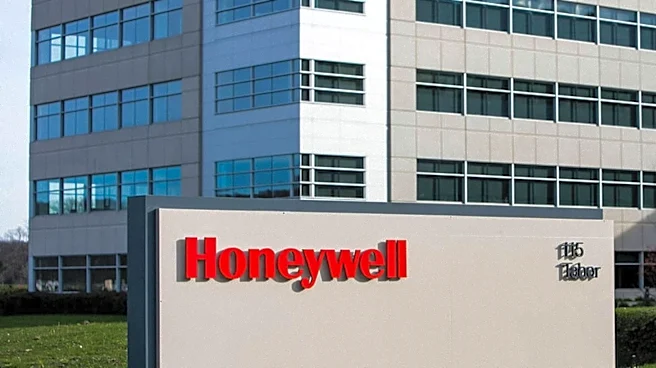
Honeywell Aerospace, now an independent, publicly traded company (HONA) since its spin-off on June 29, 2026, is focusing its growth strategy on the Asia Pacific market. Anthony Florian, President of Global Commercial Aftermarket, highlighted that a significant
portion of global growth is originating from this region. The Phoenix-based company, with over 36,000 employees and 10,000 customers, is emphasizing supply chain resilience by expanding its partner network and industrial capacity to support aging aircraft fleets and introduce new technologies. A key development is the landmark deal secured in July 2026 with IndiGo, where Honeywell Aerospace will supply avionics and auxiliary power units (APUs) for 810 Airbus A320neo family aircraft. This agreement, described as the company's largest-ever new-aircraft equipment win, further solidifies its presence in India, a country leading much of the region's growth. The company also notes strong defense growth in Japan, South Korea, and Australia, leveraging its 'develop once, deploy everywhere' technology strategy for both commercial and defense applications.
Why It's Important?
This strategic pivot towards the Asia Pacific market by Honeywell Aerospace signifies a broader trend in the aerospace industry, where emerging economies are becoming primary drivers of growth. For the U.S. aerospace sector, this focus indicates a shift in market dynamics, emphasizing international partnerships and localized support. The IndiGo deal is particularly significant as it not only represents a substantial revenue stream for Honeywell Aerospace but also deepens its technological footprint in a rapidly expanding aviation market like India. This expansion can lead to increased U.S. exports of advanced aerospace components and systems, supporting domestic manufacturing and high-tech jobs. Furthermore, the company's emphasis on supply chain resilience, through insourcing and multi-sourcing, could influence broader industry practices, potentially leading to more robust and diversified supply chains globally. The dual-use nature of its technology, applicable to both commercial and defense sectors, also positions Honeywell Aerospace to capitalize on diverse market demands in the region, reinforcing its competitive edge.
What's Next?
Honeywell Aerospace plans to continue investing in its supply chain to overcome remaining constraints, deploying capital to support its most challenged suppliers and tracking specific milestones to ensure long-term growth stability. The company anticipates sustained strong demand in the Asia Pacific region over the next five years, driven by passenger growth and resilient business and general aviation activity. It will focus on supporting existing airframes, upgrading the installed base, and securing positions on new aircraft through future deals similar to the IndiGo agreement. Further expansion of its engineering base in India and other key Asia Pacific nations is expected to support localized customer needs and foster long-term relationships. The company will also likely explore additional acquisitions to bring outsourced work in-house, further strengthening its operational control and supply chain resilience. Continued focus on its 'develop once, deploy everywhere' technology model will enable it to scale solutions across various industries and regions.
Beyond the Headlines
The strategic focus of Honeywell Aerospace on the Asia Pacific market, post-spin-off, highlights a significant geopolitical and economic realignment in the global aerospace industry. This move underscores the growing economic power and aviation demand in Asia, potentially shifting the center of gravity for aerospace innovation and manufacturing. The emphasis on localized support and long-term relationships in the region suggests a deeper engagement model beyond transactional sales, fostering technological transfer and local talent development. This could lead to increased competition for U.S. aerospace companies in their domestic market as Asian partners gain capabilities. Furthermore, the company's commitment to supply chain resilience, including insourcing and multi-sourcing, reflects lessons learned from recent global disruptions, signaling a potential long-term shift away from highly centralized, single-source supply models towards more distributed and robust networks. This could have profound implications for global trade policies and industrial strategies, prioritizing security and reliability over pure cost efficiency.