







What's Happening?
China has opted to keep its 10% import tariff on U.S. soybeans for crush use, despite lowering tariffs on some other goods between China and the U.S. This decision is discouraging private Chinese firms from directly purchasing U.S. soybeans, leading government-owned
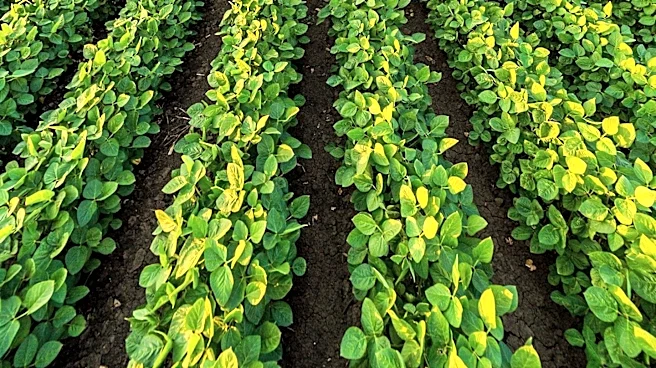
entities to continue handling these acquisitions. The U.S. soybean market experienced a sharp decline due to this news, influenced by fund and technical selling. Export inspections for U.S. soybeans were up on the week and year, primarily to China and Egypt. Domestically, 17% of U.S. soybeans have been harvested, aligning with the five-year average, with 75% of the crop dropping leaves and 58% in good to excellent condition. Soybean meal and oil futures also saw decreases following the drop in soybean prices. Meanwhile, early planting is underway in Brazil, a key competitor in the global soybean market.
Why It's Important?
The continued imposition of a 10% tariff on U.S. soybeans by China significantly impacts the U.S. agricultural sector, particularly soybean farmers. This tariff creates a competitive disadvantage for U.S. producers, as it makes their soybeans more expensive for Chinese buyers compared to those from other countries, such as Brazil. The reliance on government-owned entities for purchases rather than private firms suggests a strategic move by China to control its import sources and potentially reduce its vulnerability to trade disputes. This situation can lead to reduced demand for U.S. soybeans, affecting prices and the profitability of American farmers. The decline in soybean, soybean meal, and oil futures reflects the market's reaction to this ongoing trade barrier, highlighting the economic stakes for U.S. agricultural exports and the broader U.S. economy.
What's Next?
The U.S. agricultural sector will likely continue to monitor China's trade policies closely, as the tariff's persistence could influence future planting decisions and export strategies. U.S. soybean producers may need to explore alternative markets or adjust their production in response to the sustained trade barrier. The ongoing harvest in the U.S. and planting activities in South America, particularly Brazil, will also play a role in global supply and demand dynamics, potentially further influencing soybean prices. Discussions between the U.S. and China regarding trade tariffs on agricultural products will remain a critical factor for the market, with any changes having immediate and significant impacts on U.S. farmers and commodity traders.
Beyond the Headlines
The sustained tariff on U.S. soybeans by China underscores the broader geopolitical and economic tensions between the two nations. This trade policy is not merely an economic decision but also a strategic tool, reflecting China's efforts to diversify its agricultural imports and reduce its dependence on U.S. supplies. For the U.S., it highlights the vulnerability of its agricultural sector to international trade disputes and the need for robust trade diversification strategies. The situation also brings into focus the complex interplay between government policy, market forces, and the livelihoods of farmers, illustrating how political decisions can have profound and lasting economic consequences on a global scale.