






What's Happening?
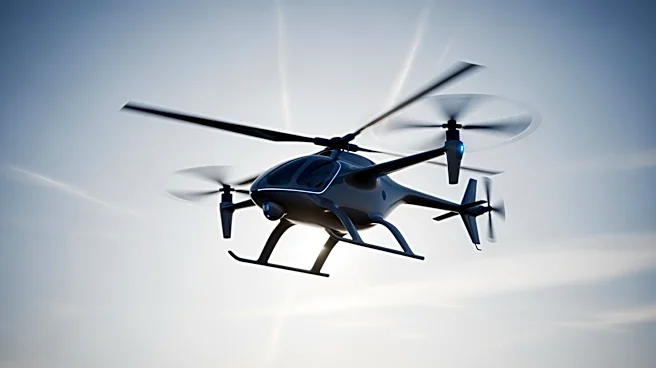
Avilus has successfully completed the maiden flight of its Wespe '9Y-01' tactical multi-role helicopter Unmanned Aerial Vehicle (UAV). The flight, remotely piloted from the RasCore Ground Control System, showcased stable and controlled performance, including
hovering and various maneuvers. The Wespe UAV is designed for missions such as tactical resupply, casualty evacuation, and close air support. It is available in piston and turbine-powered variants, with payload capacities of up to 200 kg and 350 kg, respectively. The platform features redundant avionics, primary and secondary flight control systems, and GNSS-independent navigation. Following this successful test, Avilus plans to expand the flight envelope and integrate mission control capabilities.
Why It's Important?
The successful maiden flight of the Wespe UAV marks a significant advancement in unmanned aerial technology, particularly for tactical and logistical operations. This development could enhance military and emergency response capabilities by providing a versatile platform for resupply and medical evacuation. The UAV's ability to operate in both land and marine environments with jamming-resistant navigation systems positions it as a valuable asset for various missions. The integration of mission-specific payloads further increases its utility, potentially benefiting defense sectors and emergency services by improving operational efficiency and response times.
What's Next?
Avilus plans to continue the development of the Wespe UAV by expanding its flight capabilities and integrating advanced mission control systems. This next phase will likely involve further testing to ensure the UAV can perform under various conditions and fulfill its intended roles effectively. The company may also explore partnerships or contracts with military and emergency service organizations to deploy the Wespe UAV in real-world scenarios, potentially leading to broader adoption and further innovation in UAV technology.