







What's Happening?
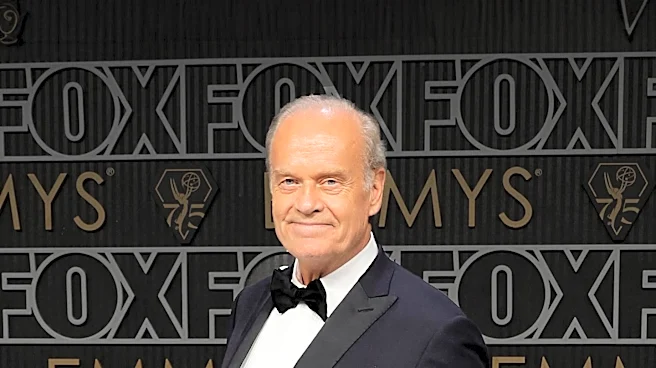
Kelsey Grammer's sitcom 'Hank,' which debuted on ABC in 2009, was canceled after only five episodes. This short run followed his successful tenure as Dr. Frasier Crane in 'Cheers' and 'Frasier.' According to a contemporaneous review by Linda Holmes for
NPR, the show was deemed 'terrible,' especially when compared to other new comedies at the time like 'Modern Family' and 'Cougar Town,' which were described as 'excellent' and 'pretty decent' respectively. The series featured Grammer as Hank Pryor, a ruined entrepreneur. The cancellation suggests that the traditional multi-camera sitcom format, which had worked well for Grammer in previous decades, was already becoming outdated by 2009, with audiences shifting towards styles more akin to mockumentaries like 'The Office.'
Why It's Important?
The swift cancellation of 'Hank' highlights a significant shift in television comedy and audience preferences in the late 2000s. For networks, it underscored the evolving landscape of sitcoms, indicating that reliance on established stars and traditional formats was no longer a guaranteed path to success. This period marked a transition where shows with more contemporary, often single-camera, and mockumentary styles began to dominate, challenging the long-standing multi-camera format that had been a staple of network television for decades. For actors like Kelsey Grammer, who had achieved immense success in a particular sitcom style, it demonstrated the difficulty of adapting to changing tastes and recapturing past magic. The failure of 'Hank' served as an early indicator of the need for innovation in sitcom production and storytelling to remain relevant to a modern audience.
What's Next?
The trend observed with 'Hank' continued to influence television production, pushing networks and creators to experiment with new formats and narrative approaches for comedies. While traditional sitcoms still exist, the emphasis has largely shifted towards more diverse storytelling and production styles. For actors who rose to prominence in older formats, this means a continued challenge in finding projects that resonate with current audiences. The industry will likely continue to prioritize shows that reflect contemporary humor and production values, moving further away from the classic multi-camera setup unless it is reinvented or specifically targets a niche audience. This ongoing evolution suggests that future attempts to revive classic sitcom styles will face similar scrutiny and potential difficulty in achieving widespread success.
Beyond the Headlines
The failure of 'Hank' extends beyond a simple show cancellation; it reflects a broader cultural and technological shift in how entertainment is consumed and what audiences find appealing. The rise of social media and digital platforms has fragmented viewership and introduced new comedic sensibilities, making the 'filmed in front of a live studio audience' style feel anachronistic to many. This development has long-term implications for the preservation of certain television formats and the careers of actors strongly associated with them. It also raises questions about nostalgia in entertainment, suggesting that while audiences may cherish past successes, they are often less receptive to direct revivals or similar styles that don't evolve with the times. The incident serves as a case study in the entertainment industry's constant need for adaptation in the face of changing cultural currents.