

What's Happening?
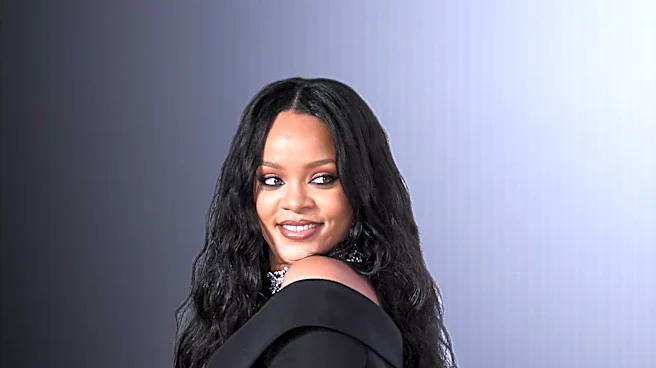
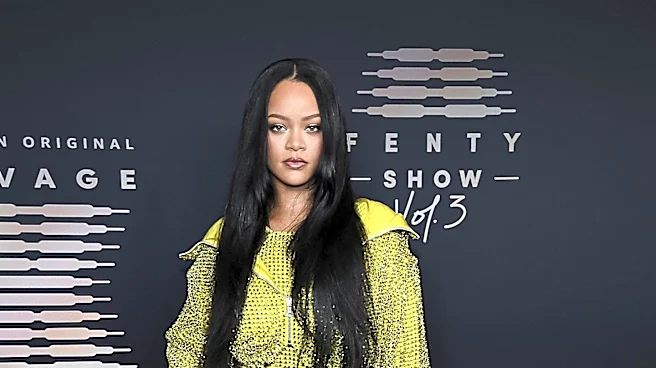
Rihanna and her one-year-old daughter, Rocki Irish Mayers, are featured in the new Lady Dior campaign, a move that has ignited discussions regarding the commercial use of a child's image. The campaign, celebrating the 'contemporary woman dear to Dior,'
includes a series of images and a film. In some photographs, Rihanna and Rocki wear matching oversized leather jackets, while in the accompanying film, Rihanna appears nude with her daughter in a diaper, both holding a Dior handbag. This marks Rocki Irish's first major fashion campaign, though she has previously appeared in Rihanna's Savage X Fenty holiday campaign and on magazine covers with her parents. The artistic direction for the campaign was led by Jonathan Anderson, with photography by Sam Rock.
Why It's Important?
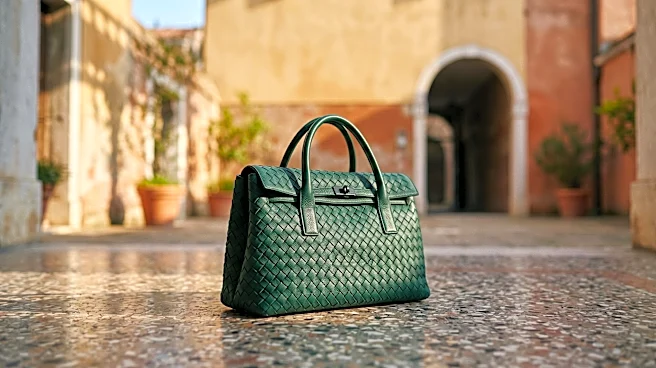
The campaign's use of Rihanna's young daughter raises significant questions about the ethics of child involvement in commercial advertising, particularly in the luxury sector. While some view it as a celebration of motherhood and a multifaceted contemporary femininity, others express concern over the potential objectification of the female body and the commercial exploitation of a child's image. This debate highlights the tension between artistic expression, brand messaging, and child protection in media. The campaign also draws parallels between the child and the new Small Lady Dior shoulder bag, suggesting a deliberate strategy to evoke emotional connections and generate buzz, regardless of whether the public reaction is positive or negative.
What's Next?
The debate surrounding the Lady Dior campaign is likely to continue on social media and in broader cultural discussions, influencing how luxury brands approach advertising with children in the future. Brands may face increased scrutiny regarding their ethical guidelines for featuring minors, potentially leading to new industry standards or public pressure for greater transparency. For Rihanna, this campaign further solidifies her role as a fashion icon who integrates her personal life, including motherhood, into her public persona and brand partnerships. The ongoing conversation could also prompt further discussions about the portrayal of motherhood in advertising and the boundaries of intimacy in commercial content.
Beyond the Headlines
Beyond the immediate controversy, this campaign touches upon deeper societal views on motherhood, celebrity, and the commercialization of private life. It challenges traditional notions of what is acceptable in advertising by presenting a raw, intimate portrayal of a mother and child. The campaign also reflects a broader trend of celebrities integrating their families into their brand, blurring the lines between personal and public life. This could lead to a re-evaluation of privacy expectations for celebrity children and the responsibilities of brands that feature them. The discussion also implicitly questions the power dynamics between celebrity parents, luxury brands, and the young children whose images are used for commercial gain.