





What's Happening?
California Governor Gavin Newsom has signed a new law requiring truck manufacturers to disclose real pricing data for electric trucks to qualify for state incentive funds from its zero-emission truck voucher program. This legislation aims to address the
lack of transparency in commercial truck pricing, as unlike passenger cars, commercial trucks do not have standard 'sticker prices' or public transaction data. This opacity often disadvantages smaller trucking fleets, which constitute over 90% of the industry, by limiting their ability to assess fair deals. Following California's lead, Maryland is now considering similar legislation. Guillermo Ortiz, Senior Clean Vehicles Advocate for the Natural Resources Defense Council, highlighted that electric trucks offer a buffer against volatile fuel costs and generally incur lower maintenance expenses, making them a financially attractive option despite a 27% increase in U.S. electric truck prices, contrasting with a 30% drop in European prices for comparable vehicles.
Why It's Important?
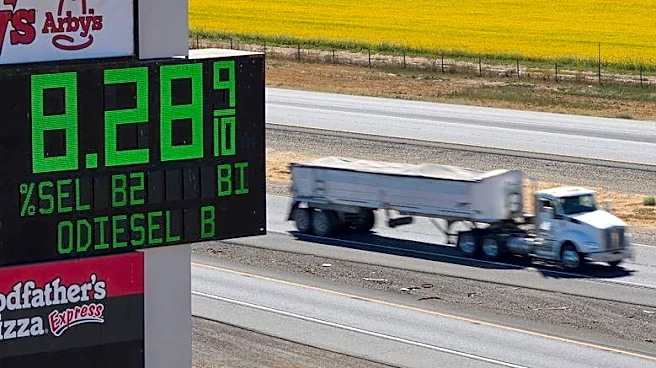
This legislative push for pricing transparency in the electric truck market is significant for several reasons. Firstly, it empowers small businesses within the trucking industry, enabling them to make more informed purchasing decisions and potentially accelerating the adoption of zero-emission vehicles. This can lead to substantial operational savings for these businesses, especially given the current high diesel prices, which have reached $6.40 per gallon in Maryland. Secondly, it supports environmental goals by promoting electric truck adoption, which can reduce diesel exhaust emissions linked to health issues like asthma, heart and lung disease, and cancer in communities along freight routes. The move by California and potential action by Maryland could set a precedent for other states, fostering a more competitive and transparent market for electric commercial vehicles nationwide and contributing to broader climate objectives.
What's Next?
Following California's enactment of the law, truck manufacturers seeking state incentives will need to comply with the new pricing transparency requirements. In Maryland, the legislative process for a similar law will likely involve discussions and debates among lawmakers, industry stakeholders, and environmental advocates. If Maryland passes such a law, it could further catalyze a national trend towards greater transparency and incentives for electric commercial vehicles. The Natural Resources Defense Council and similar organizations will likely continue to advocate for these policies in other states, emphasizing the economic and health benefits. The long-term impact will depend on the widespread adoption of these laws and the industry's response to increased transparency and the shift towards electric fleets.
Beyond the Headlines
The initiative to mandate pricing transparency for electric trucks touches upon broader themes of market fairness, environmental justice, and the role of government in shaping emerging industries. The lack of transparent pricing in the commercial truck sector has historically created an uneven playing field, disproportionately affecting smaller operators who lack the negotiating power of larger corporations. By addressing this, the legislation not only promotes economic equity but also accelerates the transition to cleaner transportation, directly benefiting communities burdened by pollution from diesel trucks. This policy could also spur innovation among manufacturers, encouraging them to offer more competitive and clearly priced electric truck options. It underscores a growing recognition that environmental sustainability and economic viability can be mutually reinforcing through thoughtful regulatory frameworks.