





What's Happening?
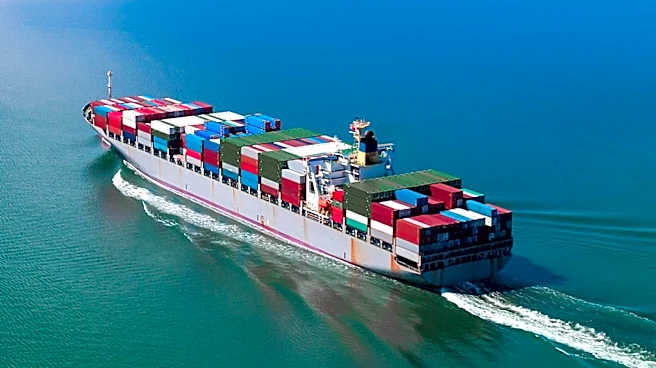
Canada is actively implementing a trade strategy, dubbed 'Plan C,' aimed at significantly diversifying its export markets beyond the United States. This initiative has led to a substantial increase in non-U.S. exports, which grew by $33 billion in a single
year. Currently, nearly one in three Canadian exports are directed to countries other than the U.S., marking the highest proportion in 40 years. This strategic shift is supported by trade agreements such as CETA and CPTPP, which provide Canadian businesses access to 1.5 billion consumers outside the U.S. The diversification efforts are not solely focused on finding new buyers for existing products but also on fostering relationships in emerging and critical sectors. These include electric vehicles (EVs), batteries, advanced manufacturing, artificial intelligence (AI) applications, and agriculture. The Canadian government is investing in industrial transformation through initiatives like The Canada Growth Fund, which has allocated $15 billion, and the expansion of Export Development Canada (EDC) into non-U.S. markets. A Strategic Exports Office is also conducting active trade missions to Asia and the EU to further these goals.
Why It's Important?
This shift in Canada's trade strategy holds significant implications for the U.S. economy and its trade relationships. For decades, Canada has been heavily reliant on the U.S. as its primary trading partner. 'Plan C' aims to reduce this dependency, which could lead to a re-evaluation of trade dynamics between the two nations. As Canada strengthens its economic ties with other global markets, particularly in Asia and Europe, the U.S. may experience a gradual decrease in its share of Canadian exports and imports. This diversification could also impact U.S. industries that have historically benefited from integrated supply chains with Canada, such as the auto sector. Furthermore, Canada's focus on advanced manufacturing, AI, and clean energy sectors could position it as a more competitive global player, potentially altering the landscape of North American industrial development. The strategy also emphasizes moving up the value chain by processing raw materials domestically, which could reduce the export of raw goods to the U.S. and increase the export of finished products to a wider array of international markets.
What's Next?
The continued implementation of 'Plan C' is expected to further solidify Canada's diversified trade relationships. The Canadian government will likely continue to leverage existing trade agreements like CETA and CPTPP to expand market access for its businesses. Active trade missions to Asia and the EU are anticipated to intensify, fostering new partnerships and investment opportunities in key sectors such as EVs, batteries, advanced manufacturing, and AI. Domestically, the Canada Growth Fund's $15 billion allocation for industrial transformation will drive investments in building new capacity and restructuring the Canadian economy. This includes efforts to reduce interprovincial trade barriers and significant investments in clean energy projects across Quebec, Newfoundland, Labrador, and the Atlantic region. The success of 'Plan C' will depend on effective execution and the ability to protect Canadian workers and industries during this transition, ensuring that the long-term benefits of diversification are realized without undue short-term hardship. This strategic shift will likely prompt ongoing adjustments in U.S.-Canada trade negotiations and economic policy.
Beyond the Headlines
Beyond the immediate economic figures, Canada's 'Plan C' represents a fundamental re-evaluation of national economic sovereignty and resilience. For decades, the political and economic convenience of relying on a single dominant trading partner, the U.S., often overshadowed the long-term risks of such dependency. This strategy signals a proactive move to mitigate future economic vulnerabilities by building a more robust and diversified global trade network. The emphasis on moving up the value chain—processing raw materials domestically rather than exporting them for others to finish—reflects a deeper commitment to national industrial capacity and job creation. This approach challenges the traditional model where Canada primarily served as a raw material supplier. Ethically, it underscores a nation's right to self-determination in its economic destiny, seeking to create 'optionality and leverage' in its international dealings. Culturally, it could foster a renewed sense of national pride in Canadian-made finished products and advanced technologies, shifting away from an identity primarily linked to resource extraction. This long-term strategic play could redefine Canada's global economic identity and its relationship with its closest neighbor.