






What's Happening?
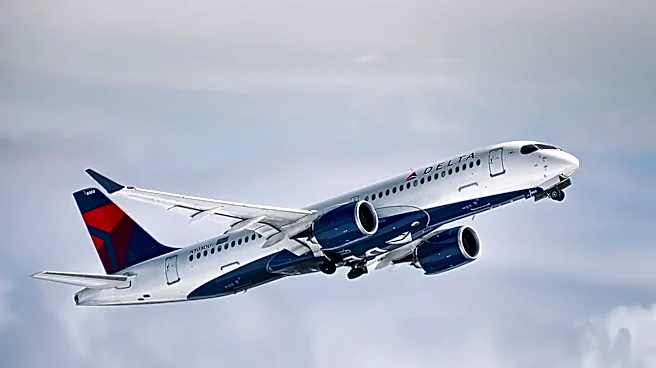
Delta Airlines is developing its own advertising and media network, a strategic move that follows a similar initiative by United Airlines. The company has hired a former leader from Deloitte and Digitas to spearhead this new venture. This internal network aims
to manage Delta's advertising efforts and media placements directly, potentially reducing reliance on external agencies. This development is part of a broader trend within the airline industry where major carriers are seeking to gain more control over their marketing and customer engagement strategies. The establishment of such a network suggests a desire for more integrated and tailored advertising campaigns, aligning with the airline's brand and business objectives.
Why It's Important?
This initiative by Delta Airlines is significant for several reasons. Firstly, it represents a shift in how major U.S. airlines approach their marketing and advertising, moving towards in-house capabilities. This could lead to greater efficiency, cost savings, and more consistent brand messaging for Delta. By bringing advertising and media operations in-house, Delta can better integrate its marketing efforts with its overall business strategy, potentially leading to more effective campaigns that resonate with its customer base. For the broader advertising industry, this trend could signal a reduction in reliance on traditional advertising agencies by large corporate clients, prompting agencies to adapt their service offerings. Furthermore, it highlights the increasing importance of data-driven marketing and direct customer engagement in the competitive airline sector, as companies seek to optimize their outreach and build stronger brand loyalty.
What's Next?
Delta Airlines will likely focus on building out the infrastructure and team for its new advertising and media network. This will involve further recruitment of talent with expertise in media planning, ad tech, and creative development. The airline will also need to establish new processes and systems to manage its advertising campaigns internally. Competitors in the U.S. airline industry will be closely observing Delta's progress and the effectiveness of this in-house model. If successful, other airlines might consider similar strategies to enhance their marketing capabilities and potentially reduce operational costs. The long-term impact could see a more fragmented advertising landscape for airlines, with a mix of in-house and external agency collaborations, as companies seek the most efficient and impactful ways to reach their target audiences.
Beyond the Headlines
The move by Delta to create an in-house advertising and media network reflects a broader industry trend towards vertical integration and data ownership. By controlling its advertising, Delta gains direct access to valuable customer data and insights, which can be used to personalize marketing messages and improve the overall customer experience. This shift also raises questions about the future of traditional advertising agencies, as more large corporations opt to bring these functions in-house. It underscores the evolving nature of marketing in the digital age, where direct control over data and messaging is becoming a competitive advantage. Ethically, this could lead to more targeted advertising, which, while potentially more effective, also raises concerns about data privacy and the extent of corporate influence on consumer behavior. The long-term implication is a more sophisticated and data-driven marketing ecosystem within the airline industry.