
What's Happening?
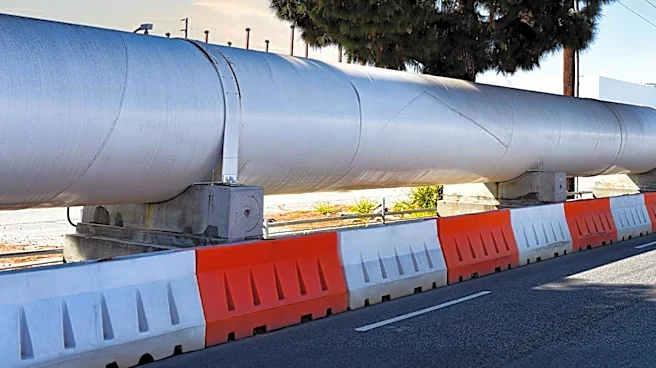
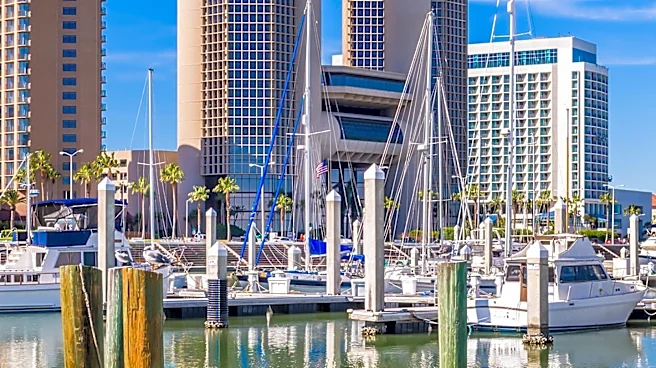
The Federal Energy Regulatory Commission (FERC) has released a draft environmental impact statement for the proposed Corpus Christi Liquefaction Stage 4 and Corpus Christi Pipeline Expansion projects.
This expansion aims to significantly increase liquefied natural gas (LNG) production capacity, adding four liquefaction trains capable of approximately 1,200 billion cubic feet per year. The project also includes two 220,000-gallon LNG storage tanks, additional marine facilities, and associated pipeline infrastructure. This development is part of a broader trend of substantial LNG industry growth along the U.S. Gulf Coast, which has become a central hub for LNG operations. Other major projects, such as Rio Grande LNG and Port Arthur LNG Phase II, are also progressing through federal regulatory processes, indicating a robust expansion of LNG export capabilities in the region. The Department of Energy (DOE) plays a separate role in authorizing the export of LNG, particularly for non-free trade agreement countries, where it conducts public-interest reviews considering factors like domestic supply and economic impacts.
Why It's Important?
The expansion of LNG infrastructure along the Gulf Coast holds significant implications for the U.S. energy market and global energy supply. Increased export capacity strengthens the U.S. position as a major global energy provider, potentially influencing international energy security and pricing. Domestically, these projects represent substantial economic investment, creating jobs and stimulating regional economies in states like Texas and Louisiana. However, they also raise complex legal and environmental considerations, including federal and state jurisdictional overlaps, environmental review processes, and potential litigation risks. The involvement of multiple federal agencies, such as FERC, DOE, the Pipeline and Hazardous Materials Safety Administration (PHMSA), and the U.S. Coast Guard, underscores the intricate regulatory landscape governing LNG development. The scale of these projects means that their legal and operational exposure extends beyond the immediate terminal facilities, encompassing extensive pipeline networks and marine transfer areas.
What's Next?
The release of the draft environmental impact statement by FERC marks a critical step in the regulatory approval process for the Corpus Christi LNG expansion. Following this, there will likely be a period for public comment and further review before a final decision is made. Developers of other projects, such as Rio Grande LNG and Port Arthur LNG Phase II, will continue to navigate their respective federal regulatory processes, seeking long-term export authorizations and environmental clearances. The industry will also need to address ongoing challenges related to pipeline infrastructure development, as LNG terminals are dependent on extensive networks for natural gas supply. Future legal disputes may arise concerning permitting, emissions, land-use, construction delays, and contractual agreements, requiring continuous monitoring of evolving federal energy policies and agency interpretations. Stakeholders, including energy companies, legal counsel, and environmental groups, will closely watch these developments as the Gulf Coast LNG industry continues its rapid expansion.
Beyond the Headlines
The rapid expansion of LNG infrastructure on the Gulf Coast highlights a broader national strategy to leverage abundant domestic natural gas resources for economic and geopolitical advantage. This push for increased LNG exports intersects with evolving energy policies and climate change concerns, creating a complex interplay of economic opportunity and environmental responsibility. The legal framework governing these projects is multifaceted, involving not only federal regulations but also state-level oversight from agencies like the Texas Commission on Environmental Quality. The long-term implications extend to potential shifts in global energy markets, the U.S.'s role in international energy diplomacy, and the ongoing debate about the balance between fossil fuel development and renewable energy transition. The lifecycle of these projects, from initial authorization to operational safety and environmental compliance, presents continuous legal and operational challenges that will shape the future of energy production and export in the United States.