






What's Happening?
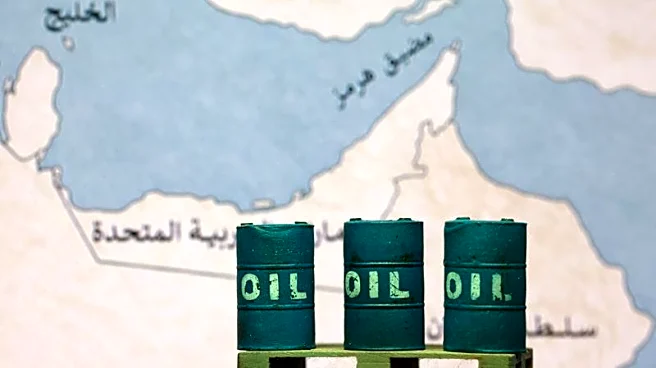
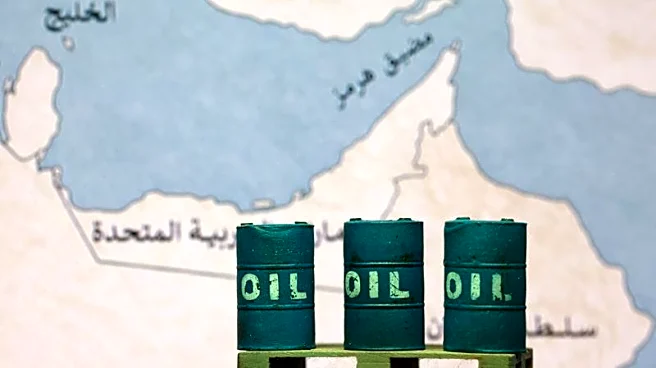
The disruption in the Strait of Hormuz has exposed vulnerabilities in the way banks account for credit risk under IFRS 9. The unexpected economic shock has misaligned pre-conflict assumptions about default probabilities and loss given default with current
conditions. This has led to increased credit stress across sectors such as aviation, logistics, and oilfield services. The challenge for financial institutions is to accurately assess credit risk without sufficient granular data, as traditional models struggle to capture the unique combination of factors affecting borrowers' revenues and input costs.
Why It's Important?
The disruption in the Strait of Hormuz highlights the limitations of existing credit risk models and the need for financial institutions to adapt to rapidly changing macroeconomic conditions. The inability to accurately assess credit risk could lead to under-provisioning and governance risks, potentially impacting the stability of financial institutions. This situation underscores the importance of forward-looking assessments and the need for management overlays to address uncertainties. The broader financial sector must navigate these challenges to maintain resilience and ensure accurate financial reporting.
What's Next?
Financial institutions are advised to prioritize diagnosing portfolio exposure and recalibrating macroeconomic scenarios to address the credit risk challenges posed by the Hormuz disruption. Management overlays will play a crucial role in providing a granular and defensible assessment of credit risk. Institutions must also ensure compliance with IFRS 7 disclosure obligations, as auditors will scrutinize provisions that lack transparency. The ongoing economic impact of the disruption will require continuous monitoring and adaptation by finance teams to mitigate risks and maintain financial stability.