


What's Happening?
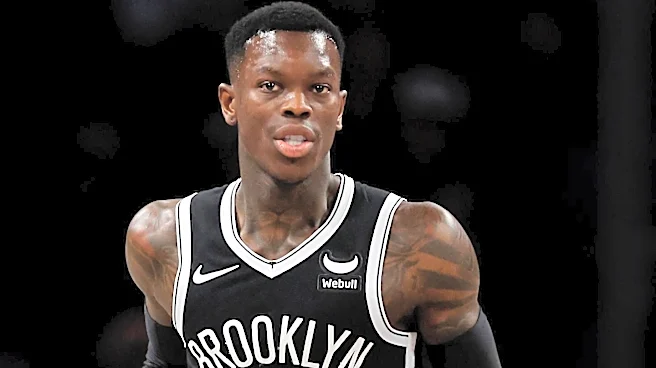
Dennis Schroder, a former Los Angeles Lakers point guard, has expressed his intention to play in the NBA for at least two more years, specifically targeting the projected salary cap increase in 2028. Schroder, who has played for 11 different NBA franchises
and is set to join his 12th with the Charlotte Hornets, aims to capitalize on the anticipated 10% spike in the NBA's salary cap ahead of the 2028-2029 season. This increase is expected to push the league's spending limit to an estimated $182.7 million, driven by the NBA's historic 11-year, $76 billion national media rights deals. Schroder, currently in the middle of a three-year, $44.4 million contract, stated in an OMR podcast that while money isn't the sole motivator, a potential offer of $10, 15, or 20 million per year would make him consider playing longer.
Why It's Important?
This development highlights the significant financial implications of the NBA's new media rights deals and their direct impact on player salaries and career longevity. The projected salary cap spike in 2028 represents a substantial economic opportunity for both veteran players like Schroder and the league as a whole. For players, it means the potential for higher earnings, influencing career decisions and contract negotiations. For the NBA, the increased revenue from media rights deals solidifies its financial stability and growth, allowing for greater investment in player talent and league operations. The 'smoothing' mechanism in the Collective Bargaining Agreement (CBA), which caps annual cap increases at 10%, is crucial to prevent market distortions, ensuring a more stable financial environment compared to past cap spikes. This strategic financial planning benefits both the league and its players, fostering a more robust and attractive professional sports ecosystem.
What's Next?
Dennis Schroder's immediate future involves playing for the Charlotte Hornets, where he is expected to serve in a backup role. His performance over the next two seasons will be critical in positioning himself for a new contract that aligns with the anticipated salary cap increase. As the NBA approaches 2028, other players and their agents will undoubtedly be strategizing to maximize their earnings in light of the projected cap spike. The league will continue to monitor its financial health and the impact of the new media rights deals. The success of these deals will dictate the actual cap increase and subsequent player salaries. This period will likely see intense contract negotiations and free agency activity as players aim to secure deals that reflect the league's enhanced financial landscape. The focus will be on how the increased revenue translates into player compensation and overall league growth.
Beyond the Headlines
Schroder's decision to extend his career to capitalize on the salary cap spike reveals a deeper trend in professional sports where financial planning and market dynamics play a crucial role in athletes' career choices. It underscores the business acumen required by modern athletes, who must consider long-term financial prospects alongside their athletic performance. The NBA's ability to secure massive media rights deals reflects the growing value of live sports content in an increasingly fragmented media landscape. This trend has broader implications for the entertainment industry, as traditional sports leagues continue to command significant viewership and advertising revenue. Ethically, it raises questions about the balance between athletic passion and financial motivation, though for many professional athletes, their career is also their primary source of income. The long-term impact of such substantial financial growth on player welfare, league competitiveness, and fan engagement will be an ongoing area of observation.