






What's Happening?
Chris Pratt, initially known for his role as Andy Dwyer on NBC's 'Parks and Recreation,' has transformed into one of Hollywood's leading action stars. His journey from a comedic sidekick to a leading man involved a significant physical transformation
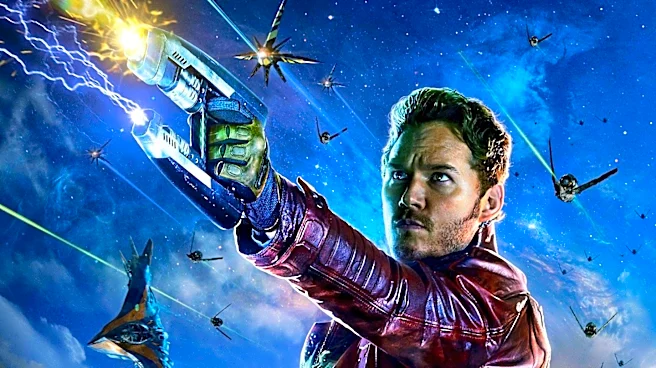
and a shift in his acting roles. Pratt's portrayal of Andy Dwyer, a character that evolved from a minor role to a fan favorite, showcased his comedic talent and likability. This set the stage for his transition to action films, highlighted by his role as Peter Quill in 'Guardians of the Galaxy.' Pratt's dedication to his craft was evident in his physical transformation, losing 60 pounds to fit the role of Star-Lord. This change marked a turning point in his career, leading to roles in major franchises like 'Jurassic World.'
Why It's Important?
Chris Pratt's career trajectory is significant as it reflects broader trends in Hollywood, where actors are increasingly required to demonstrate versatility across genres. His success in transitioning from television to blockbuster films underscores the industry's evolving expectations for leading men, who must now balance action with humor and emotional depth. Pratt's ability to anchor multiple billion-dollar franchises highlights the changing landscape of Hollywood, where actors who can appeal to diverse audiences are highly valued. His journey also illustrates the impact of physical transformation in shaping an actor's career, influencing casting decisions and opening new opportunities in the action genre.
What's Next?
Chris Pratt continues to expand his presence in the entertainment industry, with projects that leverage both his comedic and action-oriented skills. His recent work on a 157-minute action thriller available on Netflix demonstrates his willingness to explore new formats and platforms. As streaming services become more integral to the film industry, Pratt's involvement in such projects positions him well for future success. The ongoing evolution of entertainment consumption, with a shift towards digital platforms, suggests that Pratt's career will continue to adapt to these changes, potentially influencing the types of roles he pursues and the projects he chooses.