




What's Happening?
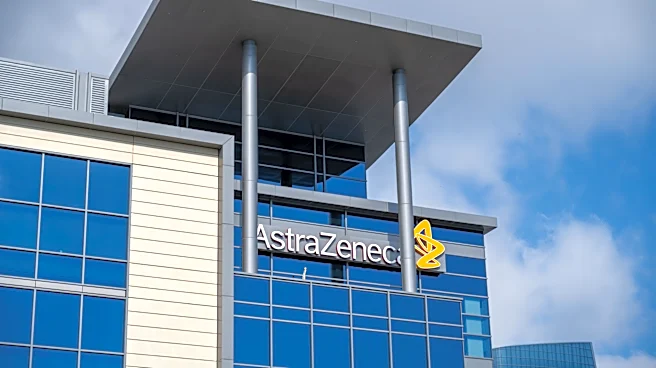
AstraZeneca PLC, a biopharmaceutical company based in Cambridge, United Kingdom, is actively engaged in the discovery, development, manufacture, and commercialization of prescription medicines. The company offers a broad range of products across various
therapeutic areas, including oncology, cardiovascular, renal and metabolism, respiratory & immunology, vaccines and immune, and therapies for rare diseases. AstraZeneca's extensive product list includes well-known medications such as Imjudo, Tagrisso, Lynparza, Farxiga/Forxiga, Symbicort, and Ultomiris. The company serves primary and specialty care physicians through a global network of distributors and local representative offices, including in the United States, Europe, Asia, Africa, and Australasia. AstraZeneca was incorporated in 1992 and was formerly known as Zeneca Group PLC before changing its name in April 1999.
Why It's Important?
AstraZeneca's continuous expansion of its biopharmaceutical portfolio and strategic collaborations holds significant importance for the U.S. healthcare landscape. The company's focus on developing innovative medicines for critical areas like oncology, cardiovascular diseases, and rare diseases directly impacts patient care and treatment options in the U.S. market. Its strategic agreements, such as those with Tempus and Pathos for oncology, CSPC Pharmaceutical Group Limited for oral candidates, Nucs AI Inc. for AI-driven response prediction, and Carterra, Inc. for drug discovery, indicate a commitment to leveraging advanced technologies and partnerships to accelerate medical breakthroughs. These collaborations could lead to more effective and personalized treatments, potentially improving health outcomes for millions of American patients and influencing the direction of pharmaceutical research and development within the U.S.
What's Next?
AstraZeneca is expected to continue its efforts in research and development, driven by its strategic collaborations and internal pipeline. The partnerships with Tempus and Pathos are aimed at developing multimodal foundation models in oncology, suggesting future advancements in cancer treatment. The collaboration with Nucs AI Inc. for AI-driven response prediction for therapeutic radioconjugates could lead to more precise and effective therapies. Furthermore, the work with Carterra, Inc. to advance lab-in-the-loop drug discovery indicates a focus on accelerating the identification and development of new drug candidates. These ongoing initiatives are likely to result in new product launches and expanded indications for existing medicines, impacting the U.S. pharmaceutical market and healthcare providers in the coming years.
Beyond the Headlines
The strategic direction of AstraZeneca, particularly its emphasis on AI and advanced computational methods in drug discovery and development, signifies a broader trend within the pharmaceutical industry. The integration of artificial intelligence, as seen in its collaboration with Nucs AI Inc., has the potential to revolutionize how drugs are discovered, tested, and personalized for patients. This shift could lead to a more efficient and cost-effective drug development process, ultimately making innovative treatments more accessible. However, it also raises questions about data privacy, ethical considerations in AI-driven healthcare, and the need for robust regulatory frameworks to ensure the safety and efficacy of AI-developed therapies. The long-term implications could include a fundamental change in the pharmaceutical business model, with increased reliance on technological partnerships and data analytics.