



What's Happening?
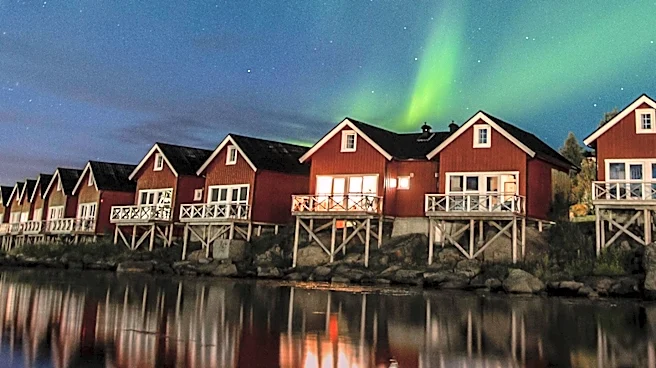
Tromsø, Norway, is recognized as a premier destination for observing the Northern Lights, particularly during the autumn and winter seasons. While the appearance of the Aurora Borealis is subject to factors like cloud cover and solar activity, Tromsø provides
various guided tours and experiences designed to enhance visitors' chances of witnessing this natural phenomenon. Autumn, specifically September and October, is highlighted as an opportune time for aurora spotting due to sufficiently dark nights that still allow for daytime activities. The Northern Lights season in northern Norway can commence as early as late August, coinciding with the onset of darker evenings. Although rare, the lights can occasionally be seen as far south as Oslo during periods of strong solar activity, but northern Norway remains the more reliable location for dedicated aurora viewing trips.
Why It's Important?
The focus on Tromsø as a prime Northern Lights destination underscores the growing interest in astrotourism and unique natural phenomena. For the U.S. tourism industry, this highlights a competitive market for travelers seeking specialized experiences. Travel agencies and tour operators in the U.S. might consider developing or promoting packages to such destinations, catering to an adventurous demographic. Economically, the demand for Northern Lights tourism supports local economies in regions like Tromsø, impacting sectors such as hospitality, transportation, and specialized tour services. Understanding these global tourism trends can inform U.S. travel businesses about evolving consumer preferences and potential areas for partnership or market development, even if indirectly. The emphasis on autumn travel also suggests a shift in tourism seasonality, potentially influencing how U.S. travelers plan international trips.
What's Next?
For those planning to visit Tromsø with the primary goal of seeing the Northern Lights, it is advisable to schedule a trip for multiple nights to increase the likelihood of a sighting, given the unpredictable nature of the phenomenon. Guided tours, such as minibus excursions that seek out clear skies and offer amenities like campfires and hot drinks, are recommended to optimize the experience. These tours often include photography services, adding value for visitors. As autumn progresses into winter, the opportunities for aurora viewing continue, though the focus might shift more towards city breaks and cozy indoor activities as daylight hours further diminish. Travelers should monitor solar activity forecasts and local weather conditions to best plan their aurora-hunting expeditions.
Beyond the Headlines
The pursuit of the Northern Lights in destinations like Tromsø reflects a broader human fascination with natural wonders and the desire for unique, awe-inspiring experiences. This type of tourism often carries an element of unpredictability, which can enhance the sense of adventure and reward for those who successfully witness the aurora. Beyond the visual spectacle, the Northern Lights hold cultural significance for indigenous communities in Arctic regions, often featuring in folklore and spiritual beliefs. The growing popularity of such experiences also raises questions about sustainable tourism practices, ensuring that increased visitor numbers do not negatively impact the delicate Arctic environment or local communities. The blend of scientific interest in solar phenomena and the aesthetic appreciation of the aurora creates a multifaceted appeal for travelers worldwide.