


What's Happening?
Tesla is set to integrate Starlink satellite internet service into its entire vehicle lineup by the end of 2027, as announced by Elon Musk. This initiative extends beyond the Cybercab, which already features Starlink connectivity. The primary purpose
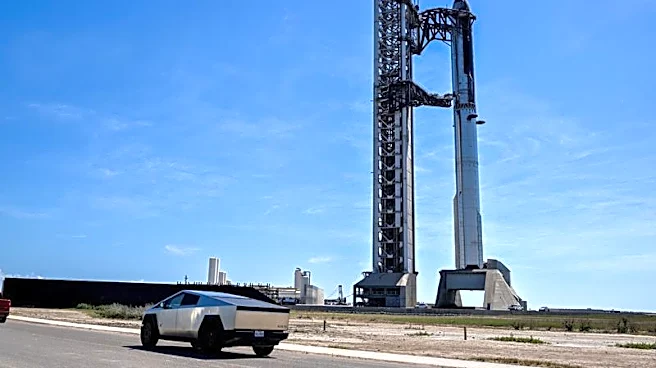
of Starlink in Tesla vehicles is to provide a redundant link for unsupervised Full Self-Driving (FSD) capabilities, particularly for connecting with waiting passengers and Tesla support. Tesla VP Ashok Elluswamy has clarified that internet connectivity is not essential for safe driving. An integrated Starlink V5 dish was unveiled in July, and Cybercabs manufactured from November 2026 will include this hardware in their trunk lids, alongside cellular connectivity. Currently, only Tesla utilizes this link, not customers. Starlink requires a clear view of the sky, indicating it will supplement cellular service rather than replace it. The rollout will exclude China, where Starlink is not permitted. SpaceX is developing Starlink Mobile into its own carrier, which could reduce Tesla's reliance on its current U.S. cellular partner, AT&T.
Why It's Important?
The integration of Starlink across Tesla's vehicle fleet signifies a strategic move to enhance the reliability and functionality of its autonomous driving systems. By providing a redundant internet connection, Tesla aims to bolster the safety and operational efficiency of unsupervised FSD, potentially accelerating its widespread adoption. This development could also impact the telecommunications industry, as SpaceX's ambition to become its own carrier for Starlink Mobile suggests a potential shift in how automotive connectivity services are provided, possibly reducing reliance on traditional cellular providers like AT&T. For consumers, this could mean more consistent and robust connectivity in their Tesla vehicles, especially in areas with limited cellular coverage. The exclusion of China from the rollout highlights geopolitical and regulatory challenges that can influence global technology deployment strategies, potentially creating a divergence in product offerings across different markets.
What's Next?
The phased rollout of Starlink integration will see Cybercabs built from November 2026 equipped with the necessary hardware. The full integration across Tesla's entire lineup is projected for completion by the end of 2027. SpaceX's ongoing development of Starlink Mobile as an independent carrier suggests future changes in Tesla's connectivity partnerships, potentially leading to reduced dependence on third-party cellular providers. The company will need to navigate regulatory landscapes in various countries, particularly concerning satellite internet services, as evidenced by the exclusion of China from the initial rollout plans. Further updates on the capabilities and user access to Starlink connectivity within Tesla vehicles are anticipated as the integration progresses, potentially offering new services or enhanced features for Tesla owners.
Beyond the Headlines
This initiative underscores the growing convergence of automotive and space technologies, with Elon Musk's companies, Tesla and SpaceX, leveraging their respective strengths to create integrated solutions. The emphasis on redundant connectivity for FSD highlights the critical importance of robust communication infrastructure for the future of autonomous vehicles, raising questions about data security, privacy, and the regulatory frameworks needed to govern such interconnected systems. The move towards Starlink Mobile as an independent carrier could also set a precedent for other automotive manufacturers to explore proprietary or alternative connectivity solutions, potentially disrupting the traditional telecommunications market. Furthermore, the strategic decision to exclude China from the Starlink rollout reflects broader geopolitical tensions and regulatory complexities that influence technological innovation and market access on a global scale, impacting how advanced technologies are deployed and adopted worldwide.