








What's Happening?
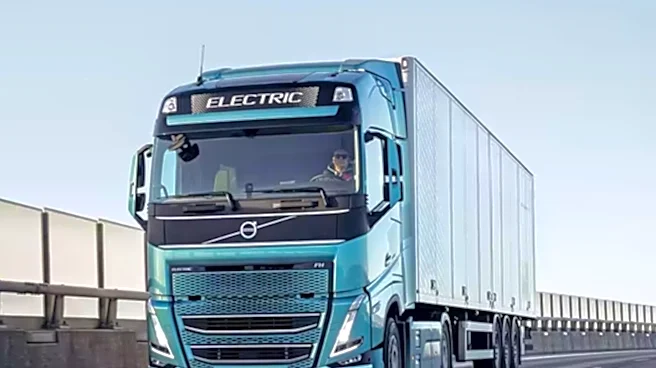
Volvo Autonomous Solutions, in partnership with Aurora, plans to deploy driverless trucks on Texas roads by the first quarter of 2027. Nils Jaeger, president of Volvo Autonomous Solutions, stated that by the end of 2027, 300 autonomous trucks will be
transporting freight hub-to-hub on routes including Dallas to Houston, Fort Worth to El Paso, and Dallas to Oklahoma City. Some operations will involve deliveries directly into customer facilities. Following Texas, driverless operations are slated to begin in Arizona in the second half of 2027, with San Antonio, Laredo, and Atlanta also under consideration as future hubs. Additionally, Volvo previewed its VNX vocational heavy-haul work trucks, which will begin production in mid-2027 and feature remote steering capabilities for job site operations.
Why It's Important?
This initiative marks a significant advancement in the commercialization of autonomous trucking technology in the U.S. The deployment of driverless trucks in Texas, a state known for its favorable regulations for Level Four commercial operations, could set a precedent for broader adoption across the country. The move is expected to address challenges such as driver shortages, improve logistics efficiency, and potentially reduce operational costs for freight companies. Volvo's projection of its autonomous business reaching $3 billion in five years highlights the substantial economic impact anticipated from this technology. The involvement of partners like DHL, DSV, and Uber Freight indicates a collaborative effort to integrate autonomous solutions into existing supply chains, potentially transforming the freight and logistics industry.
What's Next?
The immediate next steps involve the installation of Aurora's second-generation hardware in Volvo's VNL fleets at their New River Valley, Virginia manufacturing facility. Driverless operations are expected to commence in Texas in Q1 2027, with a rapid scaling to 300 trucks by the end of that year. Industrial scaling is projected to begin in 2028. The expansion into Arizona in the latter half of 2027 and consideration of additional hubs like San Antonio, Laredo, and Atlanta suggest a phased but aggressive rollout strategy. The success and safety record of these initial deployments will be crucial in shaping public perception, regulatory frameworks, and the pace of further adoption of autonomous trucking technology across the U.S. and potentially globally.
Beyond the Headlines
The advent of driverless trucks raises profound questions beyond mere logistical efficiency. The widespread adoption of autonomous vehicles could lead to significant shifts in the labor market, particularly for truck drivers, necessitating new training programs and economic adjustments. Ethical considerations regarding accident liability and decision-making algorithms in autonomous systems will also become increasingly prominent. Furthermore, the technology's reliance on advanced telematics and connectivity introduces new cybersecurity challenges, requiring robust protection against potential hacking or system failures. The integration of these highly automated systems into existing infrastructure will also demand substantial investment and coordination, potentially reshaping urban planning and highway design to accommodate a new era of transportation.