




What's Happening?
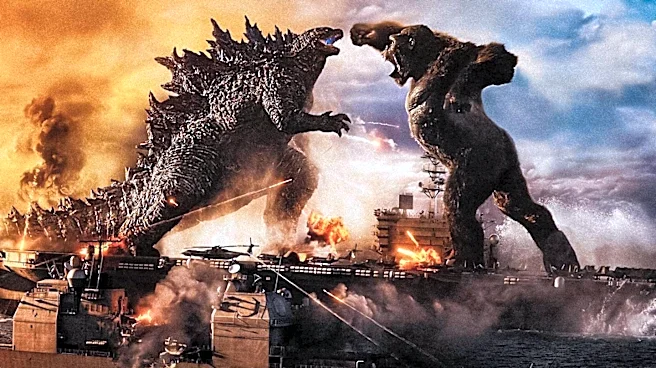
A brilliant teaser for the 2021 film "Godzilla vs. Kong" created significant anticipation, promising a monster film that appeared to be much better than its eventual reception. The teaser effectively sold a grand spectacle, leading many viewers to expect
a cinematic experience that ultimately differed from the final product. This discrepancy between the initial promotional material and the movie's outcome highlights a common challenge in film marketing, where teasers are designed to generate maximum excitement, sometimes setting expectations that the full feature struggles to meet. The article specifically notes that the difference between the film presented in the teaser and the well-known Japanese Godzilla was particularly disappointing for some viewers, suggesting a divergence from established character portrayals or thematic depth.
Why It's Important?
The impact of misleading or overly ambitious teasers on audience perception is crucial for the film industry. When promotional materials create expectations that the final film cannot fulfill, it can lead to audience dissatisfaction, negative word-of-mouth, and potentially affect box office performance for future installments in a franchise. For U.S. audiences, who are often exposed to extensive marketing campaigns for major blockbusters, the experience of a film not living up to its teaser can erode trust in promotional content. This situation also underscores the power of initial impressions and how a well-crafted teaser can shape public opinion long before a movie's release. The comparison to the Japanese Godzilla also points to the cultural significance and established expectations surrounding the character, indicating that deviations from core elements can be met with criticism from long-time fans.
What's Next?
Filmmakers and marketing teams will likely continue to refine their strategies for teasers and trailers, aiming to balance excitement generation with accurate representation of the final product. The industry may see a continued effort to manage audience expectations more effectively, perhaps through more transparent marketing or by releasing teasers that are more indicative of the film's actual tone and plot. For the "Godzilla" franchise, future promotional campaigns will need to consider the lessons learned from past releases, ensuring that teasers align more closely with the ultimate cinematic experience to maintain audience trust and enthusiasm. This could involve a greater emphasis on showcasing the film's true narrative and character development rather than solely focusing on spectacle.
Beyond the Headlines
This scenario touches upon the broader ethical considerations in advertising and marketing. While the primary goal of a teaser is to entice, there's a fine line between creative promotion and potentially misrepresenting a product. In the entertainment industry, this can lead to a cycle where audiences become increasingly skeptical of early promotional materials, making it harder for genuinely good films to break through the noise. It also highlights the evolving relationship between creators and consumers in the digital age, where initial impressions, often formed from short clips, can significantly influence a product's trajectory. The discussion around the "Godzilla vs. Kong" teaser serves as a case study in how marketing can both elevate and inadvertently undermine a film's reception, impacting its legacy and the audience's long-term engagement with the franchise.