



What's Happening?
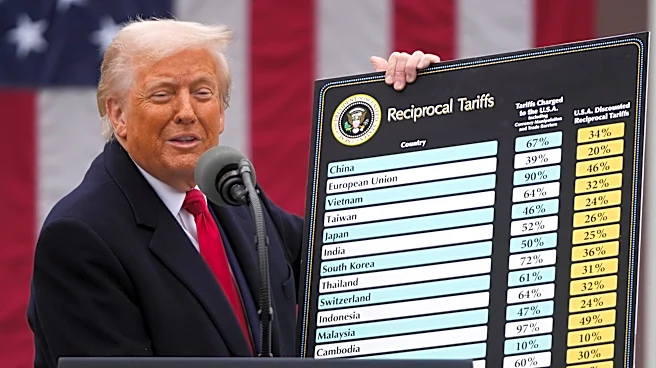
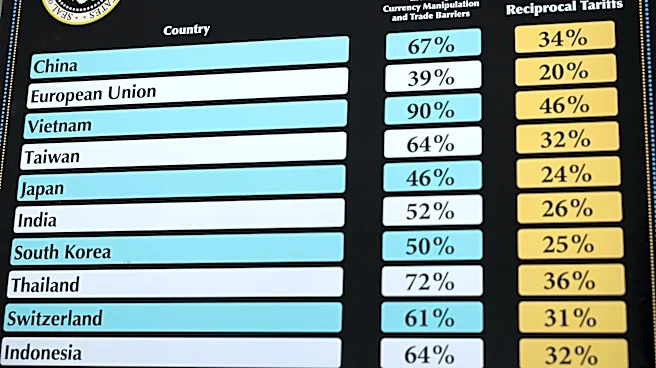
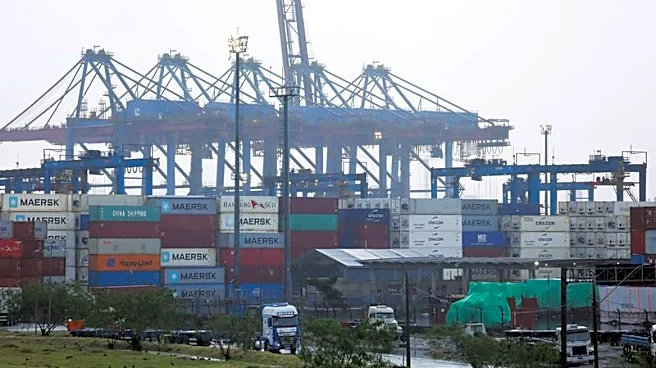
During a FOX Business interview, Kevin Hassett addressed the economic impact of new tariffs. When confronted with the criticism that tariffs increase the cost of household items, Hassett asserted that exporters have largely absorbed these costs, leading
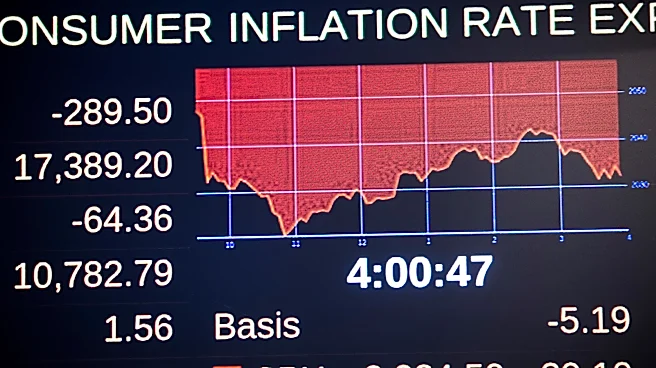
to a decrease in inflation. However, the interviewer countered this by stating that inflation had risen to 3.8%, marking the highest rate since May 2023. This exchange highlights a disagreement on the immediate effects of tariffs on consumer prices and the broader inflationary environment. Hassett's perspective suggests that the burden of tariffs is not primarily falling on domestic consumers, while the interviewer's data points to a recent uptick in inflation.
Why It's Important?
This discussion is important because it touches upon a critical aspect of U.S. trade policy and its domestic economic consequences. Tariffs are often implemented with the intention of protecting domestic industries and jobs, but critics frequently argue that they lead to higher prices for consumers and can stifle economic growth. Hassett's claim that exporters are 'eating the price' suggests a potential benefit for U.S. consumers, as the cost burden is not being passed on. However, the counterpoint regarding rising inflation, reaching 3.8% and the highest since May 2023, indicates that other economic factors might be at play, or that Hassett's assessment of tariff impact might not fully capture the current economic reality. This debate has significant implications for policymakers considering future trade actions and for businesses and consumers grappling with economic uncertainty.
What's Next?
The ongoing debate surrounding the impact of tariffs and inflation suggests that these economic issues will remain central to public discourse and policy discussions. Future economic reports on inflation rates and consumer spending will likely provide further data to support or refute the claims made by Hassett and the FOX Business interviewer. Policymakers will continue to monitor these trends closely as they consider adjustments to trade policies and monetary strategies. Businesses will need to adapt to potential shifts in consumer purchasing power and supply chain costs, while consumers will continue to face the realities of evolving prices for household goods. The trajectory of inflation and the effectiveness of current tariff policies will be key indicators to watch.
Beyond the Headlines
Beyond the immediate economic figures, this exchange highlights a fundamental tension in economic policy: the balance between protecting domestic interests through measures like tariffs and managing overall economic stability, particularly inflation. The differing viewpoints presented by Hassett and the interviewer underscore the complexity of attributing economic outcomes solely to one policy lever. It also raises questions about the methodologies used to assess the impact of tariffs and the potential for lag effects in their economic consequences. The long-term implications could involve a re-evaluation of trade strategies, a deeper analysis of global supply chain dynamics, and a renewed focus on how various economic policies interact to shape the financial well-being of American households.