




What's Happening?
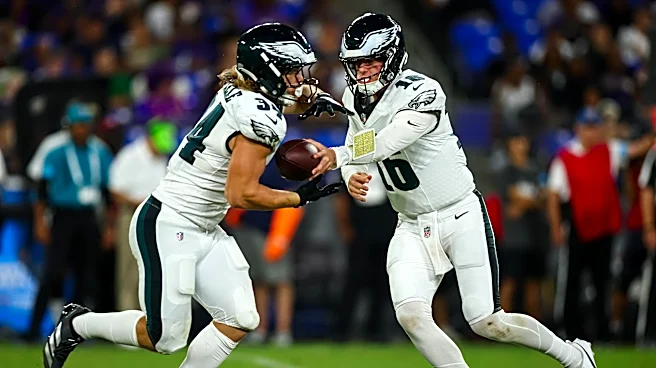
Philadelphia Eagles running back Ja’Quinden Jackson has shown full movement and use of all four limbs, and his CT scan returned negative, following a scary head injury sustained during the opening kickoff of a game. Jackson was injured while attempting
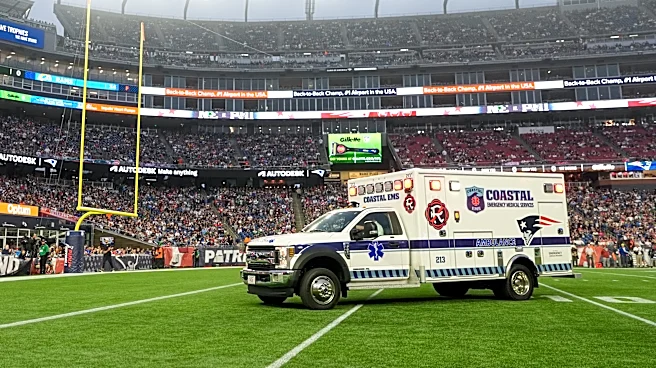
a tackle, taking a knee to the head, which resulted in him being knocked unconscious and his arms going into a fencing position. Medical personnel immediately attended to him on the field before he was transported to a local hospital for evaluation. His agent, Damien Butler of CMV Sports, released a statement confirming Jackson's positive condition, expressing gratitude for the quick actions of the Eagles medical staff and first responders.
Why It's Important?
This incident highlights the inherent risks of head injuries in professional football and the critical importance of immediate medical response protocols. The fencing response observed in Jackson is a neurological sign often associated with concussions or other brain trauma, making the negative CT scan and full movement particularly reassuring. The swift and effective actions of the medical staff and first responders underscore the advanced safety measures and training in place within the NFL to manage such emergencies. For the Eagles, Jackson's recovery is paramount, and his health status will be closely monitored, impacting his availability for future games. This event also serves as a stark reminder to players, coaches, and fans about the physical dangers associated with the sport.
What's Next?
While Ja’Quinden Jackson has shown full movement and a negative CT scan, his immediate return to play is uncertain. The agent's statement did not specify if Jackson remains hospitalized or if he will travel with his teammates. Typically, players who sustain head injuries undergo a rigorous concussion protocol, which involves a series of evaluations and gradual return-to-play steps to ensure full recovery and prevent further injury. The Eagles medical staff will continue to monitor Jackson's condition closely. His long-term health and career trajectory will depend on his complete recovery and adherence to medical guidance. This incident will likely reinforce ongoing discussions within the NFL about player safety and concussion prevention strategies.
Beyond the Headlines
This event extends beyond a single player's injury, touching upon the broader issue of player safety in the NFL, particularly concerning head trauma. The league has invested significantly in research and protocols to mitigate the risks of concussions, yet incidents like Jackson's demonstrate the persistent challenges. The fencing response is a visible and alarming indicator of potential brain injury, which often sparks renewed public and media attention on the long-term health consequences for athletes. This situation also underscores the emotional impact on teammates, coaches, and fans who witness such events. It reinforces the ongoing debate about balancing the physicality of football with the imperative to protect players' health, potentially influencing future rule changes or equipment advancements aimed at reducing head injuries.