






What's Happening?
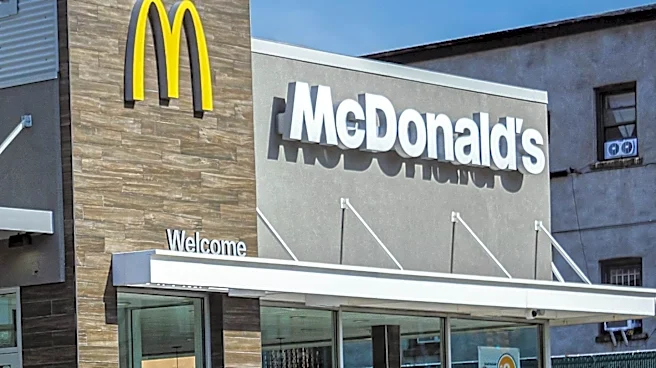
McDonald's Corporation is currently under increased investor scrutiny as early indications of a U.S. sales recovery coincide with significant investments in restaurant remodels, ongoing value bundle tests, and resistance from franchisees. This combination
of factors is drawing sharp attention to the company's execution risk. Recent trading activity reflects a mixed sentiment of optimism and caution among investors. McDonald's has seen a 1-month share price return of 12.98% and a 90-day gain of 5.16%, suggesting growing momentum driven by the remodel and value-menu strategies. However, the year-to-date share price is still down by 7.44%, and the 1-year total shareholder return has declined by 7.26%. According to a popular narrative on Simply Wall St, McDonald's is considered 17% overvalued, with a fair value estimated at $240.72 compared to its recent closing price of $280.70. This premium valuation places the company's remodel and value reset initiatives under a more intense spotlight, with assumptions about margins and cash generation being key to this assessment.
Why It's Important?
The current situation at McDonald's is significant for several reasons, impacting both the company's financial performance and the broader fast-food industry. The interplay between a potential U.S. sales recovery and costly operational changes highlights the challenges of balancing growth with profitability in a competitive market. The pushback from franchisees regarding remodels and value menus could strain relationships within the McDonald's system, potentially affecting operational efficiency and brand consistency. If franchisee economics are squeezed, it could lead to reduced investment in local stores or a decline in service quality, ultimately impacting customer experience and sales. Furthermore, the perception of McDonald's as overvalued by some investors suggests that the market has high expectations for the success of these initiatives. Failure to meet these expectations, particularly if U.S. traffic softens, could lead to a downward revision of stock value and investor confidence. This scenario also provides a case study for other fast-food chains navigating similar pressures to innovate, offer value, and manage franchisee relations.
What's Next?
The immediate future for McDonald's will likely involve continued monitoring of its U.S. sales recovery and the effectiveness of its restaurant remodels and value menu offerings. The company will need to carefully manage franchisee relations, potentially addressing concerns about the financial impact of these initiatives to ensure their buy-in and successful implementation. Investors will be closely watching for fresh data on sales performance, customer traffic, and the financial health of franchisees. The sentiment on McDonald's stock is currently split, indicating that upcoming financial reports and operational updates will be crucial in shaping market perception. The company may need to provide clearer guidance on how it plans to sustain margin growth and cash generation, especially if the current premium valuation is to be justified. Decisions regarding further value menu adjustments or remodel pacing could also be influenced by ongoing market feedback and competitive pressures.
Beyond the Headlines
Beyond the immediate financial metrics, the situation at McDonald's reflects broader trends in the U.S. fast-food industry, particularly the evolving consumer demand for value and the operational complexities of large franchise systems. The emphasis on value bundles suggests a persistent consumer sensitivity to price, a trend that has been amplified by economic uncertainties. This could lead to a long-term shift in how fast-food chains structure their menus and pricing strategies. The franchisee pushback also highlights the inherent tension in franchise models between corporate strategic goals and the financial realities of individual operators. This dynamic can influence the pace of innovation and the overall health of the brand. Ethically, the balance between corporate profitability and franchisee viability is a critical consideration, as a struggling franchisee base can undermine the entire system. The outcome of McDonald's current strategies could set precedents for how other major quick-service restaurants approach modernization, value propositions, and franchisee engagement in the coming years.