







What's Happening?
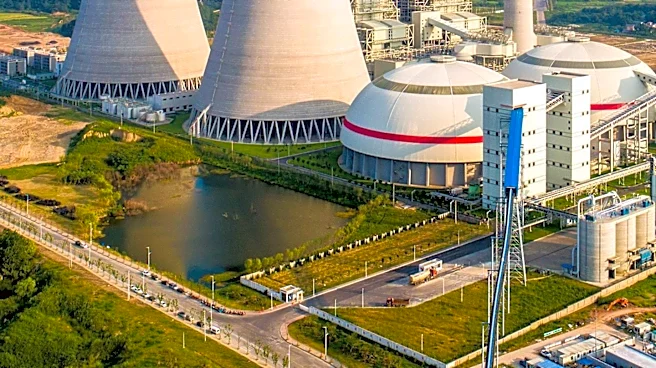
A video shared by Yu Jing, a spokesperson for the Chinese embassy in India, has highlighted the efficiency of Chinese smart factories, particularly in the production of air conditioners. In these factories, a new air conditioner can be assembled in just
six seconds, thanks to a highly automated process involving numerous industrial robots. This efficiency has allowed Chinese manufacturers to dominate the global market, producing over 80% of the world's air conditioners. The demand for these products has surged in Europe, driven by heatwaves, with sales of one model exceeding 200,000 units this year, doubling last year's figures. The smart factories have significantly reduced the need for human labor on production lines, enabling rapid production and delivery to meet European demand.
Why It's Important?
The rise of smart factories in China represents a significant shift in global manufacturing dynamics, particularly in the air conditioning sector. This development underscores China's ability to leverage automation to maintain a competitive edge in mass production, which poses challenges for European manufacturers struggling to compete with the cost efficiency and speed of Chinese production. The increased reliance on Chinese products also highlights Europe's growing dependency on Chinese manufacturing, raising concerns about economic and supply chain vulnerabilities. This situation could prompt European policymakers to reconsider their industrial strategies and explore ways to enhance local production capabilities.
What's Next?
As European demand for air conditioners and other cooling devices continues to grow, Chinese manufacturers are likely to further consolidate their market position. European companies may need to innovate and invest in automation to compete effectively. Additionally, there could be increased scrutiny and potential regulatory measures from European authorities to address the trade imbalance and dependency on Chinese imports. This scenario might also lead to strategic partnerships or investments in technology to boost local manufacturing capabilities.