
What's Happening?
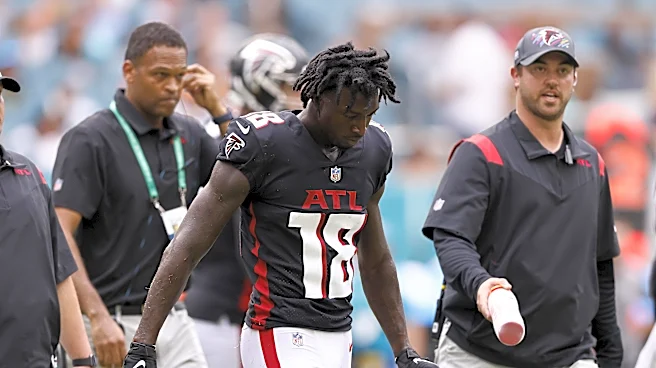
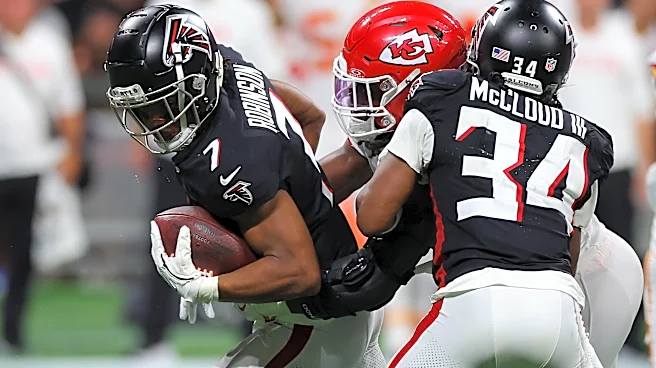
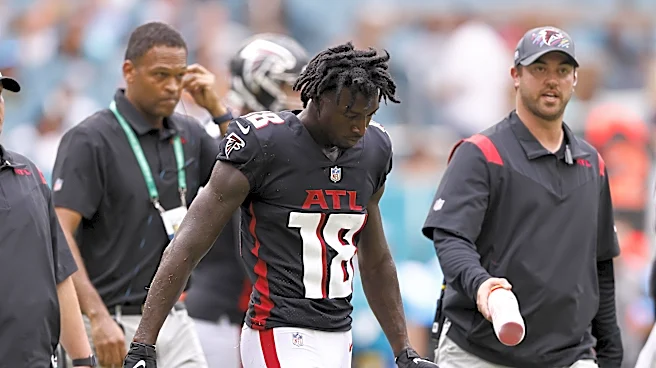
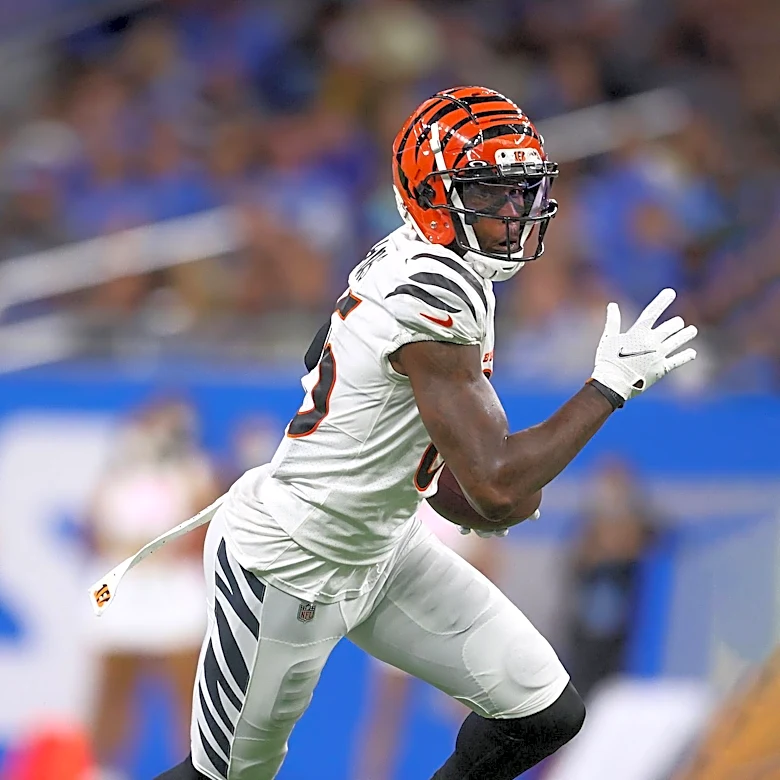
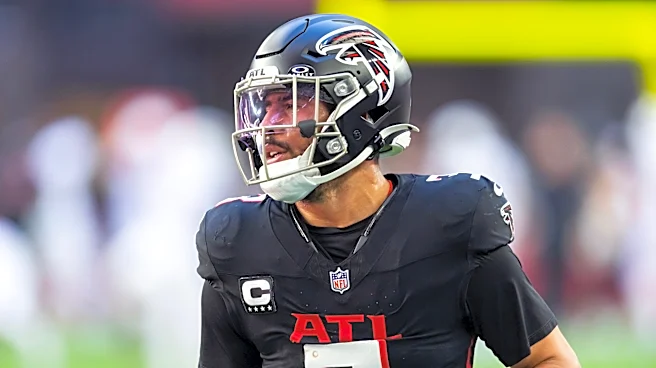
The NFL has issued a fine of $23,882 to Atlanta Falcons wide receiver Drake London for "unnecessary roughness" due to an impermissible "use of the helmet" during the Week 9 game against the Cincinnati Bengals. The infraction occurred in the third quarter
on a 21-yard gain, where London lowered his helmet into Bengals defender DJ Turner. Despite the clear violation, officials did not flag the play in real-time. This fine marks London's second consecutive week being penalized by the NFL, as he was previously fined $12,537 in Week 8 for "Striking/kicking/kneeing." The $23,882 fine is the largest issued this week, tying with Seattle Seahawks linebacker Ernest Jones for the same infraction. The Bengals ultimately won the game against the Falcons 34-17.
Why It's Important?
The NFL's decision to fine Drake London for helmet use underscores the league's ongoing commitment to player safety and its efforts to reduce head injuries. These fines serve as a deterrent, aiming to modify player behavior and enforce rules designed to protect athletes from potentially career-ending or life-altering injuries. For players, repeated fines can become a significant financial burden, especially as subsequent infractions carry higher penalties, with a second helmet-use violation potentially costing $47,762. This policy impacts team strategies, as coaches must emphasize proper tackling and blocking techniques to avoid penalties and fines. The lack of a real-time flag on the play also highlights the challenges officials face in identifying and penalizing such infractions during fast-paced game action, potentially leading to calls for enhanced review mechanisms or stricter in-game enforcement to align with the league's safety objectives.
What's Next?
Drake London will face increased scrutiny from officials and the league in upcoming games, as a second "use of the helmet" infraction would result in a significantly higher fine of $47,762. This financial penalty, coupled with the potential for in-game penalties, could influence his playing style and decision-making on the field. The NFL will continue to monitor player conduct closely, and other players may also face similar fines for violations of player safety rules. For the Falcons, this incident may prompt coaches to reinforce proper technique with London and other players to avoid future penalties that could impact game outcomes or player availability. The ongoing enforcement of these rules is a continuous process, with the league consistently reviewing plays and issuing fines to maintain player safety standards across all teams.
Beyond the Headlines
The NFL's consistent fining of players for helmet-to-helmet contact and other dangerous plays reflects a broader cultural shift within professional football towards prioritizing player well-being. This emphasis on safety is a direct response to growing concerns about concussions and long-term neurological damage, which have led to significant legal challenges and public pressure on the league. The fines, while financial, also serve as a symbolic statement about the NFL's commitment to evolving the game to be safer, even if it means altering traditional aspects of play. This ongoing effort has implications for youth football as well, as safer techniques promoted at the professional level often trickle down to lower leagues, influencing coaching methods and equipment standards. The balance between maintaining the physicality of the sport and ensuring player safety remains a complex and evolving challenge for the NFL.