







What's Happening?
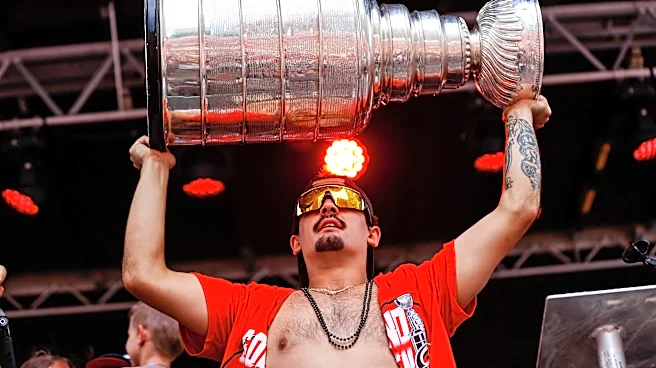
Carolina Hurricanes owner Tom Dundon is facing criticism for including the names of his wife and five children on the Stanley Cup, following his own name, before listing members of the front office, coaches, and players. This practice, while controversial,
is not unprecedented in the NHL. Other team owners, such as Jeffrey Vinik of the Tampa Bay Lightning and Vincent Viola of the Florida Panthers, have also included family members on the Cup in past years. The engraving of names on the Stanley Cup is a tradition that often sparks debate, especially when non-team members are included. The Hockey Hall of Fame, which is responsible for the care of the Cup, is not involved in the engraving process. The Hurricanes have declined to comment on the matter.
Why It's Important?
The inclusion of family members' names on the Stanley Cup raises questions about the integrity and tradition of the sport. For many, the Cup represents the pinnacle of achievement in hockey, and its engravings are seen as a historical record of those who contributed to a team's success. Critics argue that including non-team members diminishes the honor and could set a precedent that undermines the significance of the engravings. This controversy highlights the ongoing tension between tradition and personal recognition within professional sports. It also reflects broader discussions about the role of ownership and the influence of personal relationships in professional sports organizations.
What's Next?
The NHL and the Hockey Hall of Fame may face increased pressure to establish clearer guidelines regarding who can be included on the Stanley Cup engravings. This could lead to a review of current practices and potentially stricter criteria for future engravings. Teams might also reconsider their internal policies on who is eligible to have their name engraved, balancing tradition with the desires of ownership. The public and media scrutiny could prompt other team owners to be more cautious in their engraving decisions to avoid similar controversies.
Beyond the Headlines
This situation underscores the complex dynamics between team ownership and the traditions of professional sports. It raises ethical questions about the commercialization of sports achievements and the potential for personal interests to overshadow team accomplishments. The controversy also reflects broader societal debates about merit, recognition, and the influence of wealth and power in shaping cultural symbols. As sports continue to evolve, these discussions may influence how traditions are preserved or adapted in the future.